The UX & Content Scorecard:
A 391-Point Benchmarking Framework
The Challenge:
Most UX evaluation frameworks are too general to be actionable. At the agency level, that gap is expensive — teams redesign without a clear baseline, and there's no reliable way to measure whether the new experience is actually better than what it replaced.
The Solution:
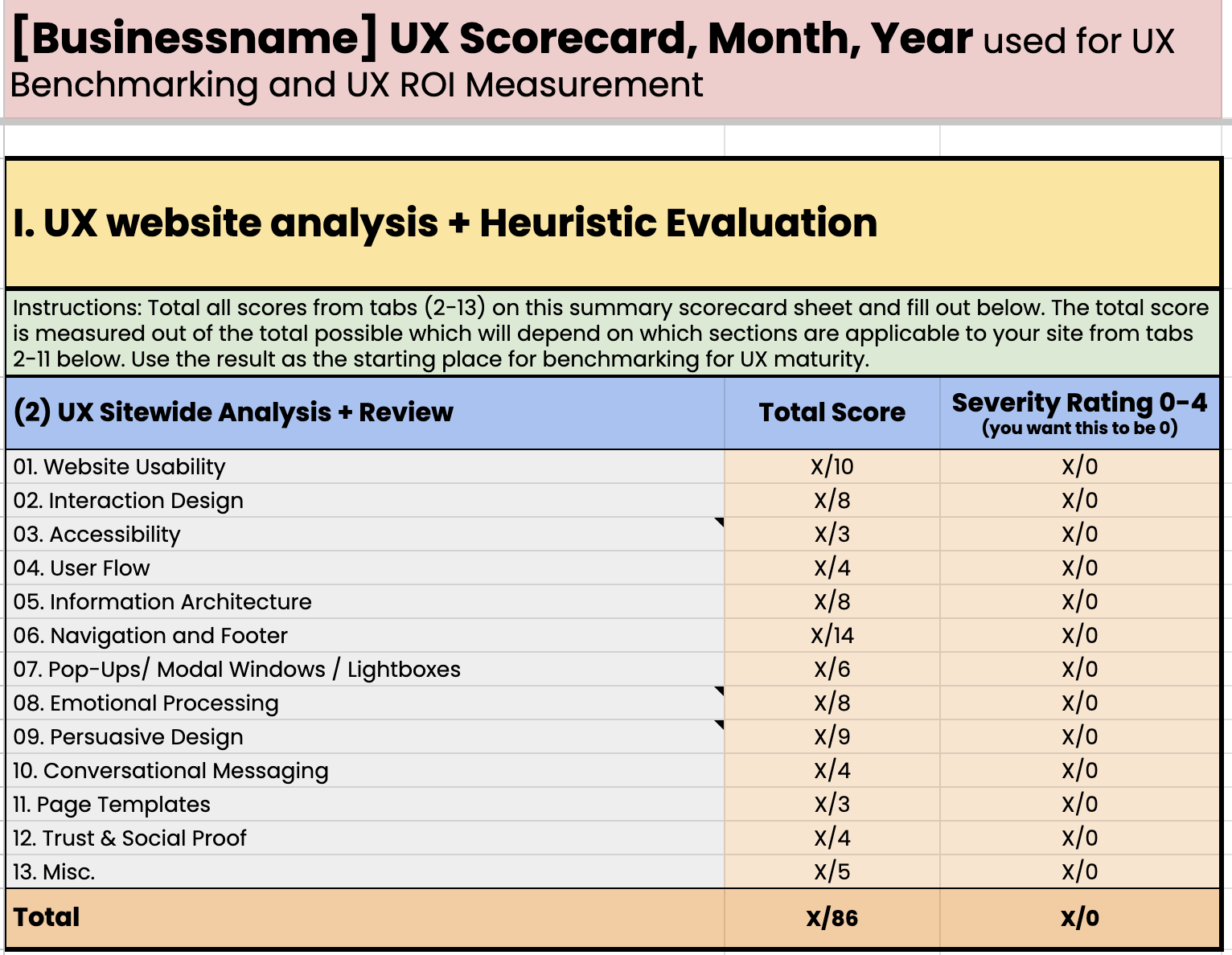
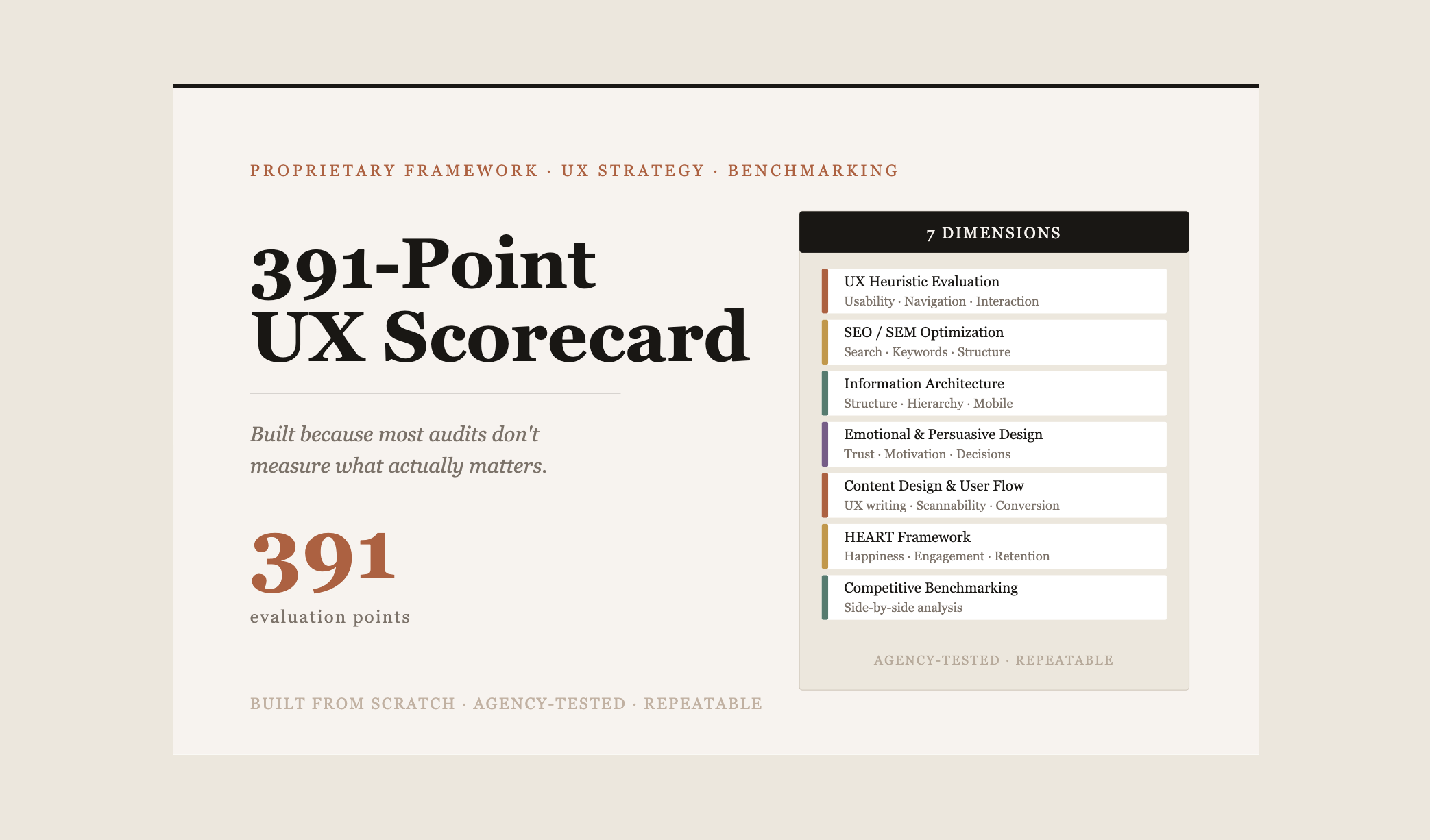
I built a proprietary 391-point UX and Content Scorecard from the ground up — a comprehensive benchmarking system that captures what most audits miss: not just usability, but emotional resonance, persuasive design, content clarity, and competitive positioning.
The scorecard covers:
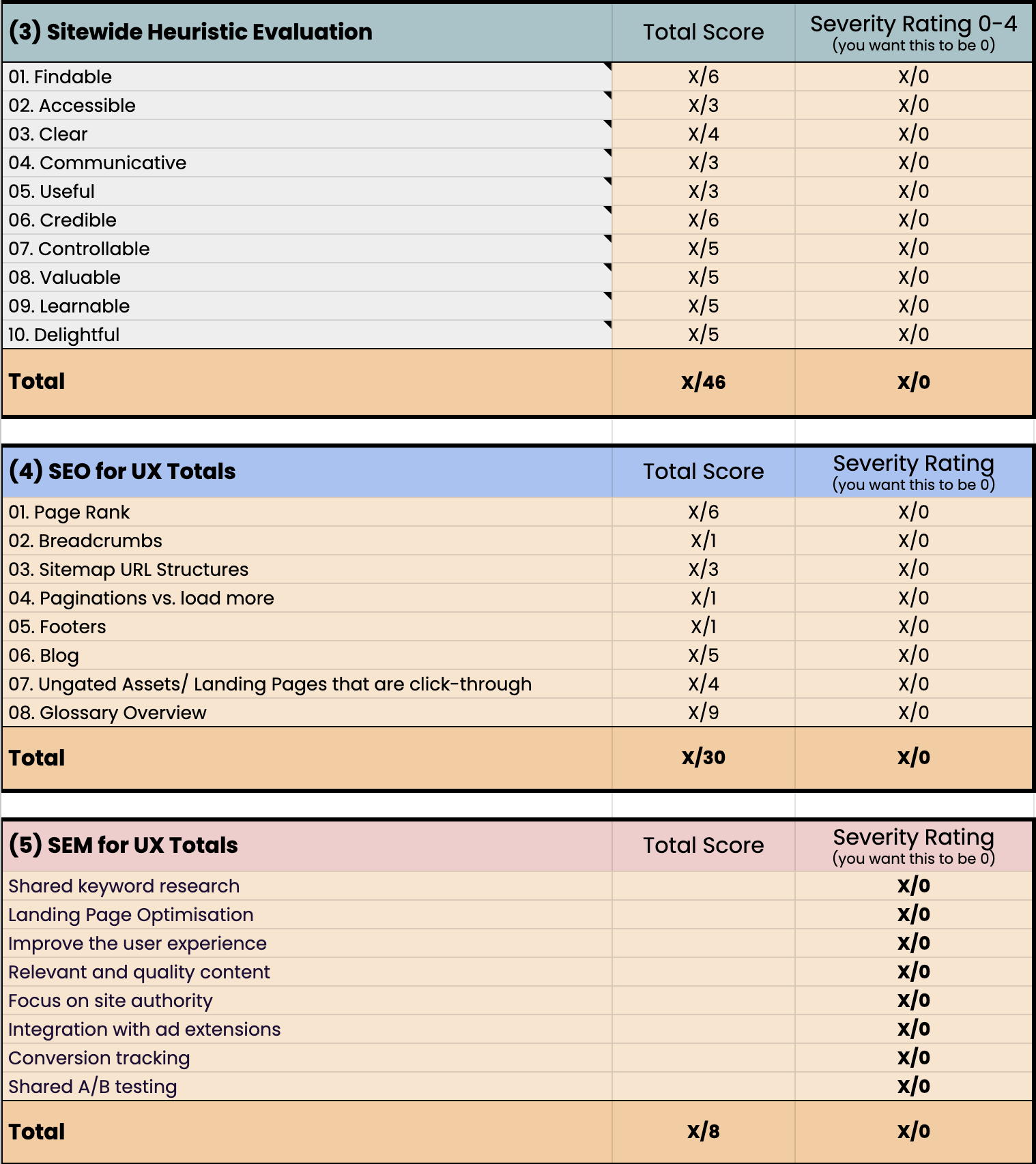
UX analysis & heuristic evaluation — systematic assessment of usability, navigation, and interaction design against established best practices
SEO/SEM optimization — page-by-page analysis of search visibility, keyword alignment, and technical content structure
Information architecture & mobile — evaluation of site structure, content hierarchy, and cross-device experience
Emotional processing & persuasive design — assessment of how content and design influence user trust, motivation, and decision-making
Content design & user flow — UX writing quality, cognitive load, scannability, and conversion path clarity
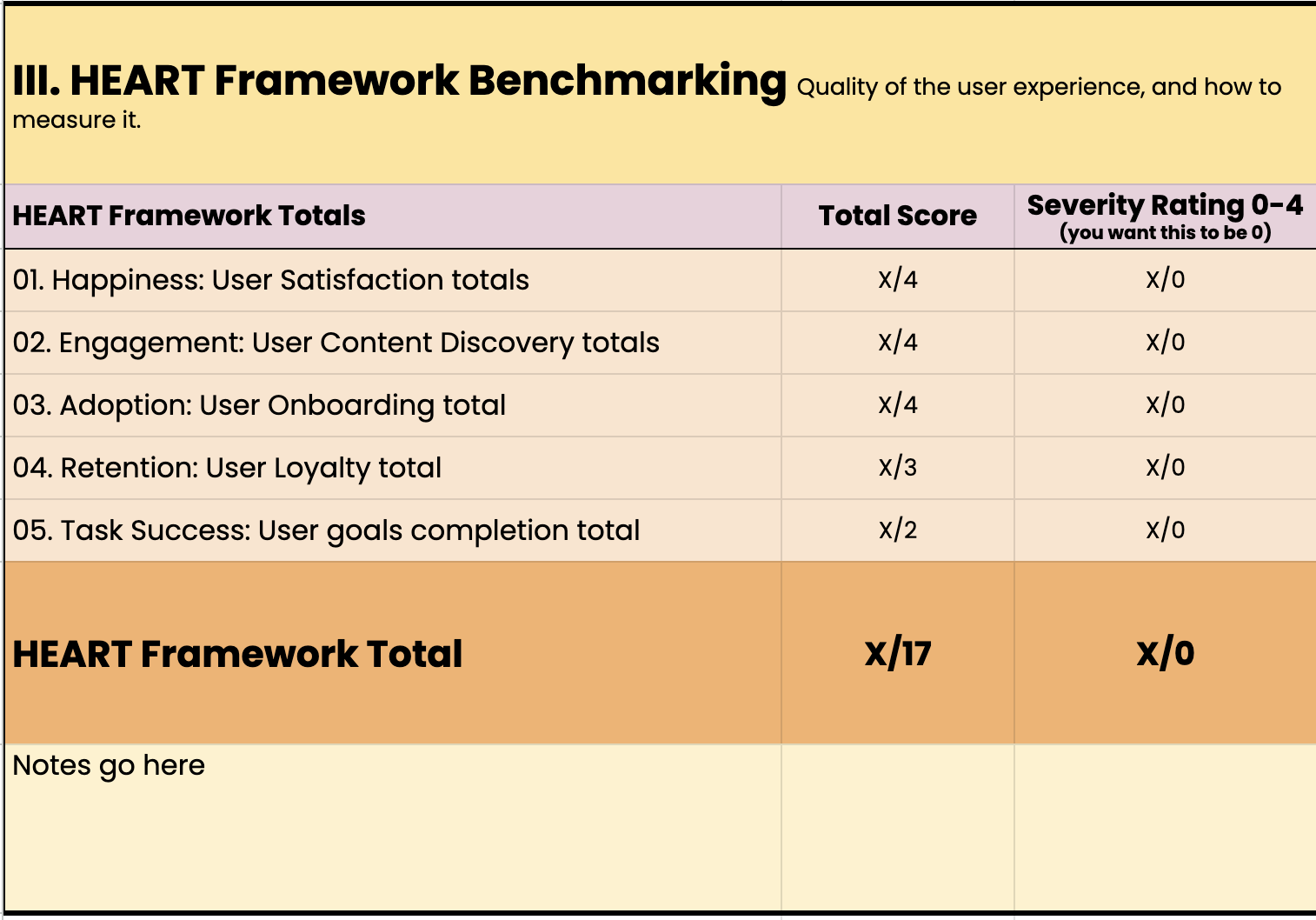
HEART Framework benchmarking — structured measurement of Happiness, Engagement, Adoption, Retention, and Task Success to track experience improvement over time
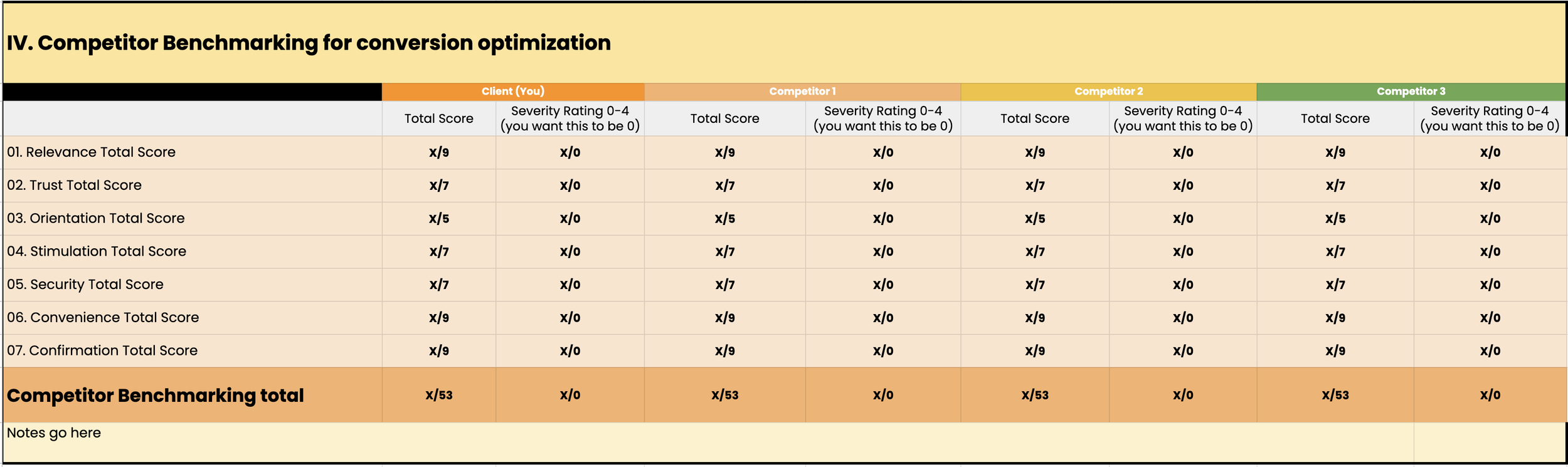
Competitive benchmarking — side-by-side analysis of how a site performs relative to key competitors across all dimensions
The result is a system that gives design and content teams a shared language for evaluating experience quality — and a repeatable way to prove that what they built is better.