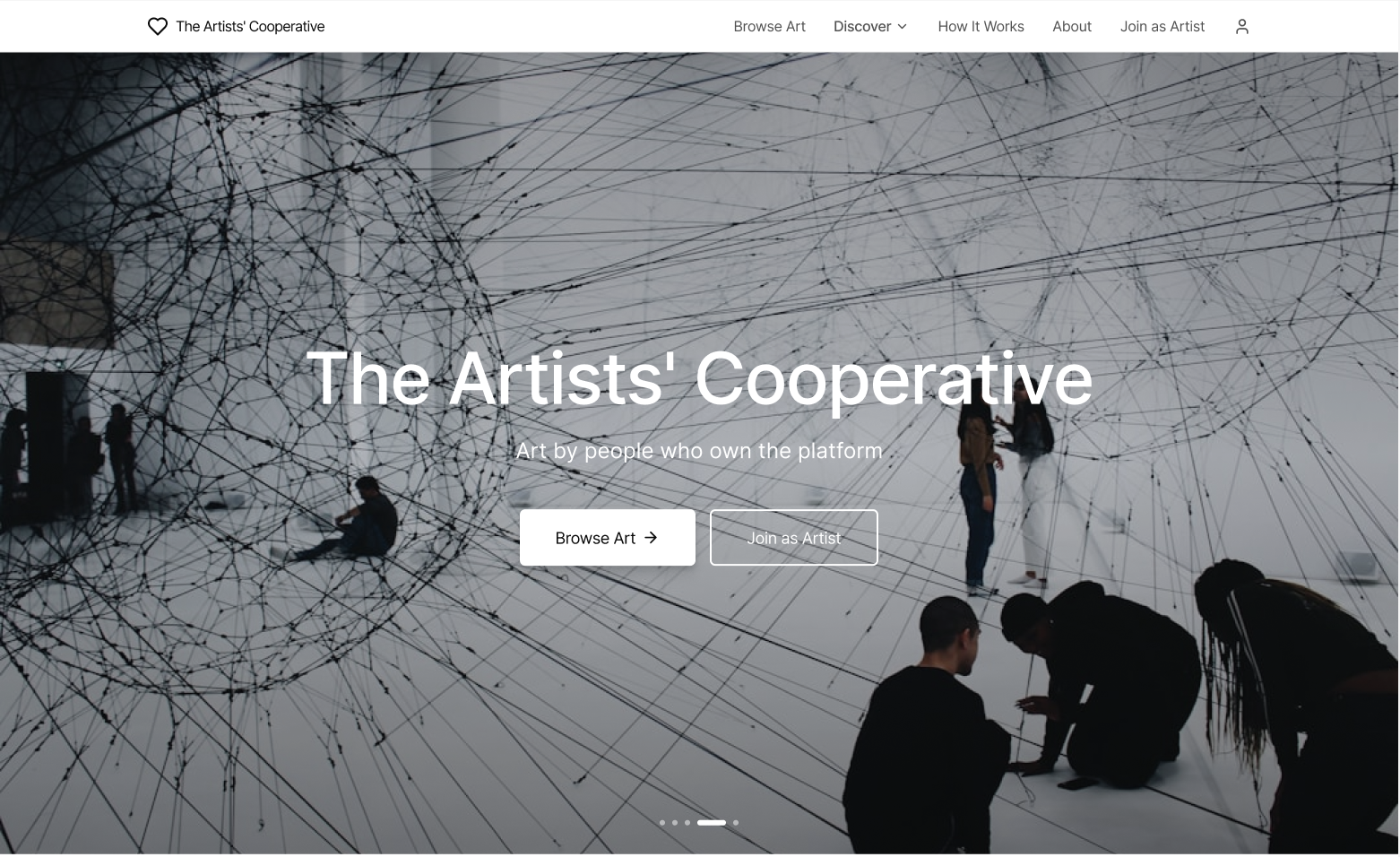
The Artists' Cooperative
A Worker-Owned Art Marketplace
Concept Project — UX Strategy & Platform Design
Role: UX Strategy · Product Definition · Content Design · AI-Assisted Prototyping
Project Type: Speculative Platform Design — Concept through High-Fidelity Prototype
Tools: Figma · Lucidchart · Miro · User Interviews · A/B Testing
The Problem
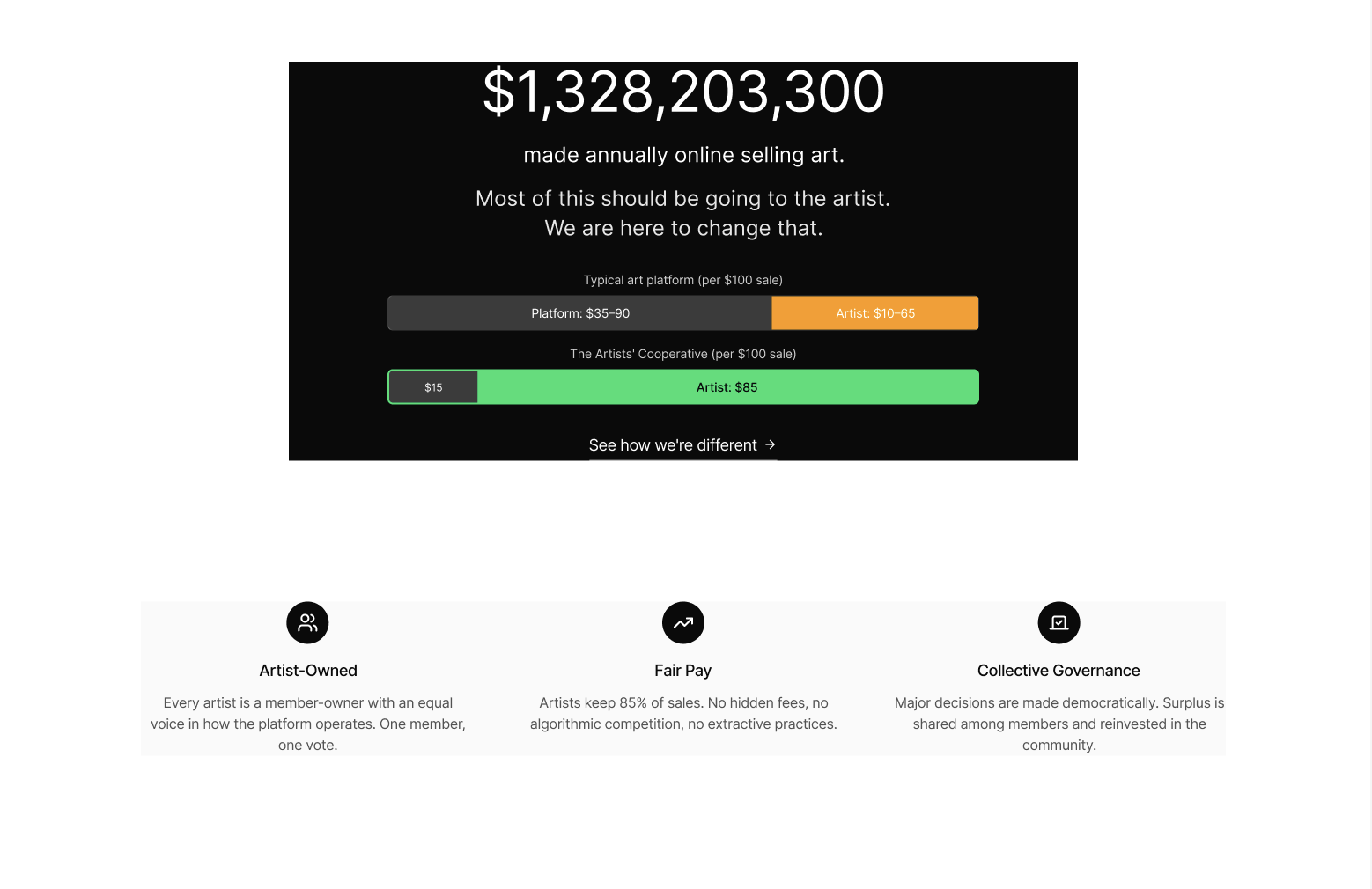
Artists create the value. Platforms capture the profit.
The online art economy is structurally extractive — commission structures on major marketplaces routinely take 30–50% of an artist's sale, while algorithms determine visibility in ways that favor volume over quality and established names over emerging work. I wanted to design a platform that took a different position: what if the people selling the art also owned the platform they sold it on?
Research & Discovery
I started with generative research to understand both the economic problem and the user experience problem — because in this case they're the same problem.
On the economic side, I analyzed commission structures, money flow, and artist outcomes across Etsy, Minted, Saatchi Art, Society6, INPRNT, Artfinder, and Artsy. I also looked at cooperative platform models — Mondragon, colony.io, mirror.xyz — to understand how worker ownership actually functions at a platform level.
On the user side, I conducted preliminary user research interviews with artists to understand what selling art online actually felt like from their side. The data was consistent: frustrated, deflated, stressed, tired. The dominant pain points were lack of audience reach, the gap between visibility and sales, the expense of listing and shipping eating into margins, and the difficulty of categorization when your work doesn't fit a neat niche.
I also ran a competitive audit with SWOT analysis on Saatchi Art, OpenSea, and Deviant Art — looking at UI, trust-building, discovery mechanics, and how each platform handled the artist-buyer relationship.
The research shaped a clear positioning: between Etsy and Artsy. Authentic work, real artists, fair economics, cooperative governance.
Design Process
From the research I defined the platform's value proposition, KPIs, and product strategy — aligning business goals, user needs, and brand communication before touching a single screen.
I then built out the core experience architecture:
User roles and personas based on research interviews — artist members, buyers, and curators each with distinct needs and flows.
A user flow and site map developed in Lucidchart, with IA refined through card sorting.
Journey mapping for the primary artist persona, tracking the full arc from onboarding through first sale.
Key experience decisions that came directly from the research:
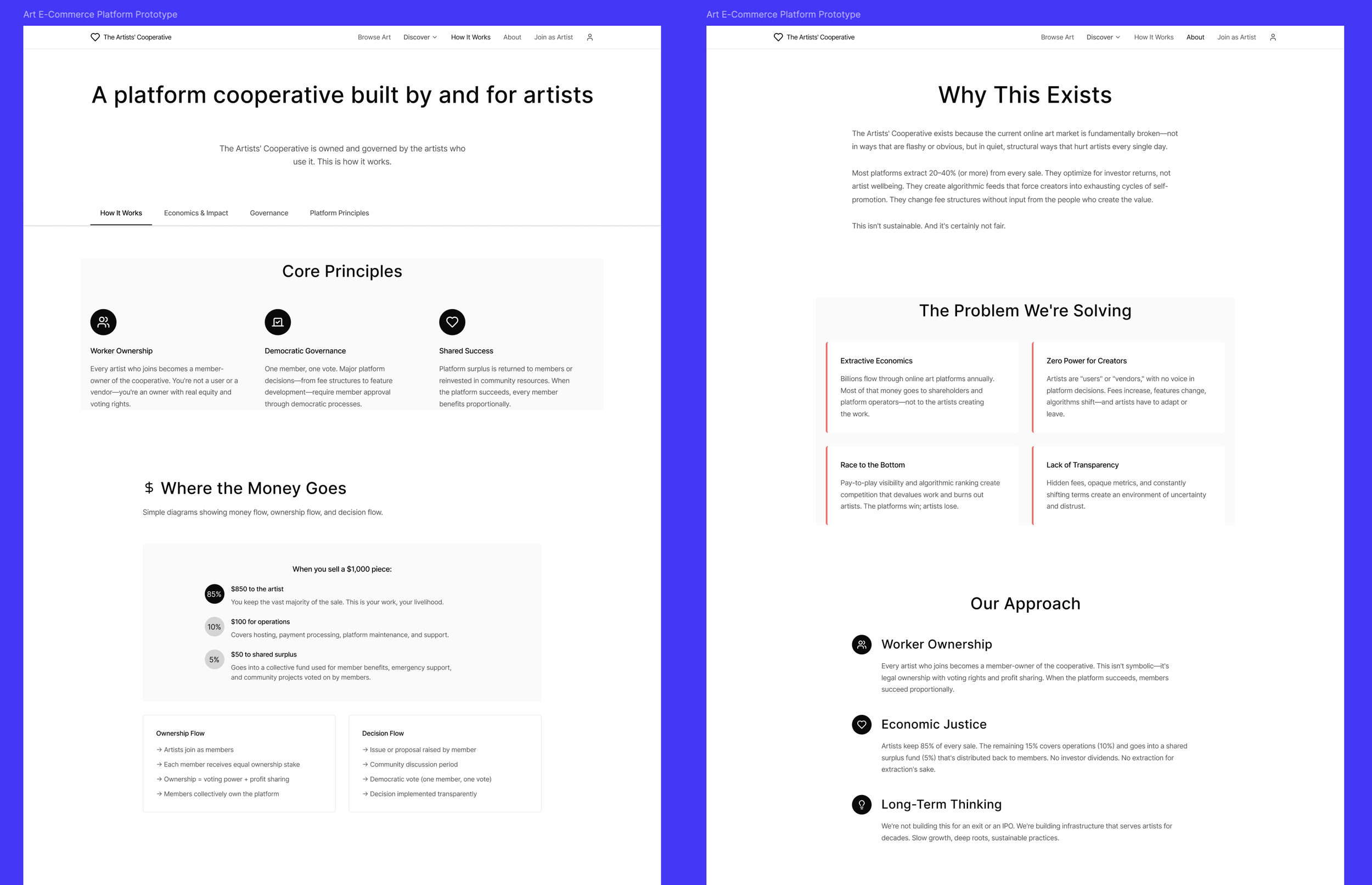
Making money visible. A "Where the Money Goes" transparency layer built into the product detail page — not hidden in an FAQ. Platform economics as UX, not backend policy.
Authenticity standards. No mass production. A clear AI art policy. Artist verification built into onboarding.
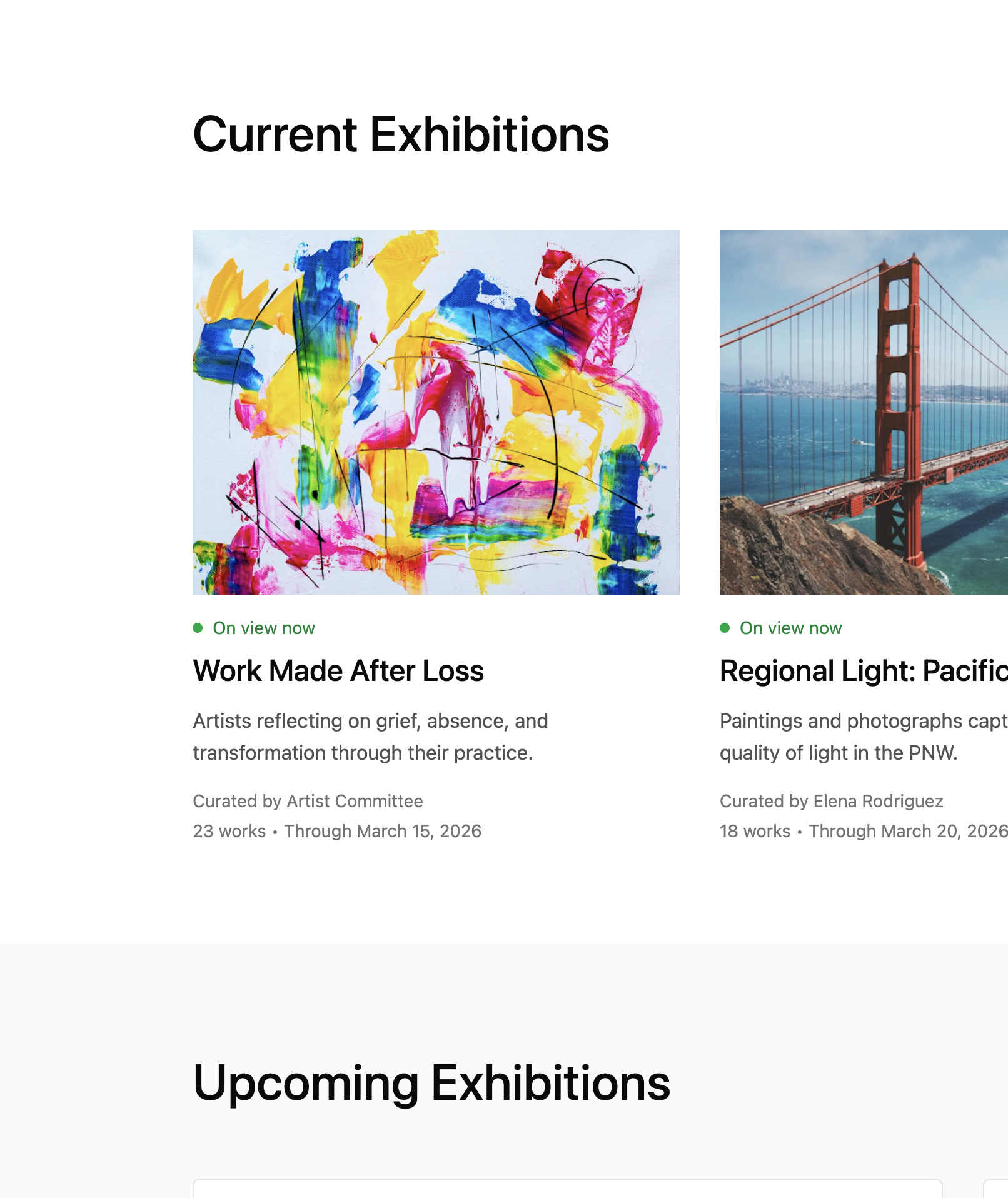
Discovery without algorithmic overwhelm. Curated exhibitions and feeling-based browse filters as alternatives to the ranking systems that favor whoever already has an audience.
I prototyped the full platform in Figma — homepage, browse, artist profile, product detail, how-it-works, cooperative about page, and artist onboarding — then ran A/B testing on three key components with five users and iterated based on findings.
On Using AI
I used AI to accelerate prototyping and iteration, not to generate ideas or make decisions.
Once I had the research, the positioning, the architecture, and the content strategy in place, I used Figma Make to move from concept to high-fidelity prototype faster than I could have working manually. I wrote precise prompts that translated my research and intent into visual structure — which meant I could explore complex arguments visually, iterate on hierarchy and messaging, and test "argument-driven" UI sections rather than just screens.
The vision, the ethics, the framing, and every significant decision remained mine. AI reduced the friction between idea and artifact. It did not replace the thinking that made the artifact worth building.
I mention this explicitly because this project is partly about authorship — who gets credit, who captures value, who owns the platform. It felt important to be clear about that in my own process as well.
What the Prototype Demonstrates
The final prototype functions on three levels simultaneously: as a marketplace concept with real user flows, as a cooperative charter rendered as UX, and as a critique of extractive platform models made legible through design.
The skills it demonstrates are the ones that matter for platform-scale content strategy work: the ability to hold economic complexity and user experience simultaneously, to make abstract systemic problems concrete through content architecture, and to design for creators — not just around them.