SSCRA — Content Strategy, Copywriting & Website for a Wildfire Resilience Nonprofit
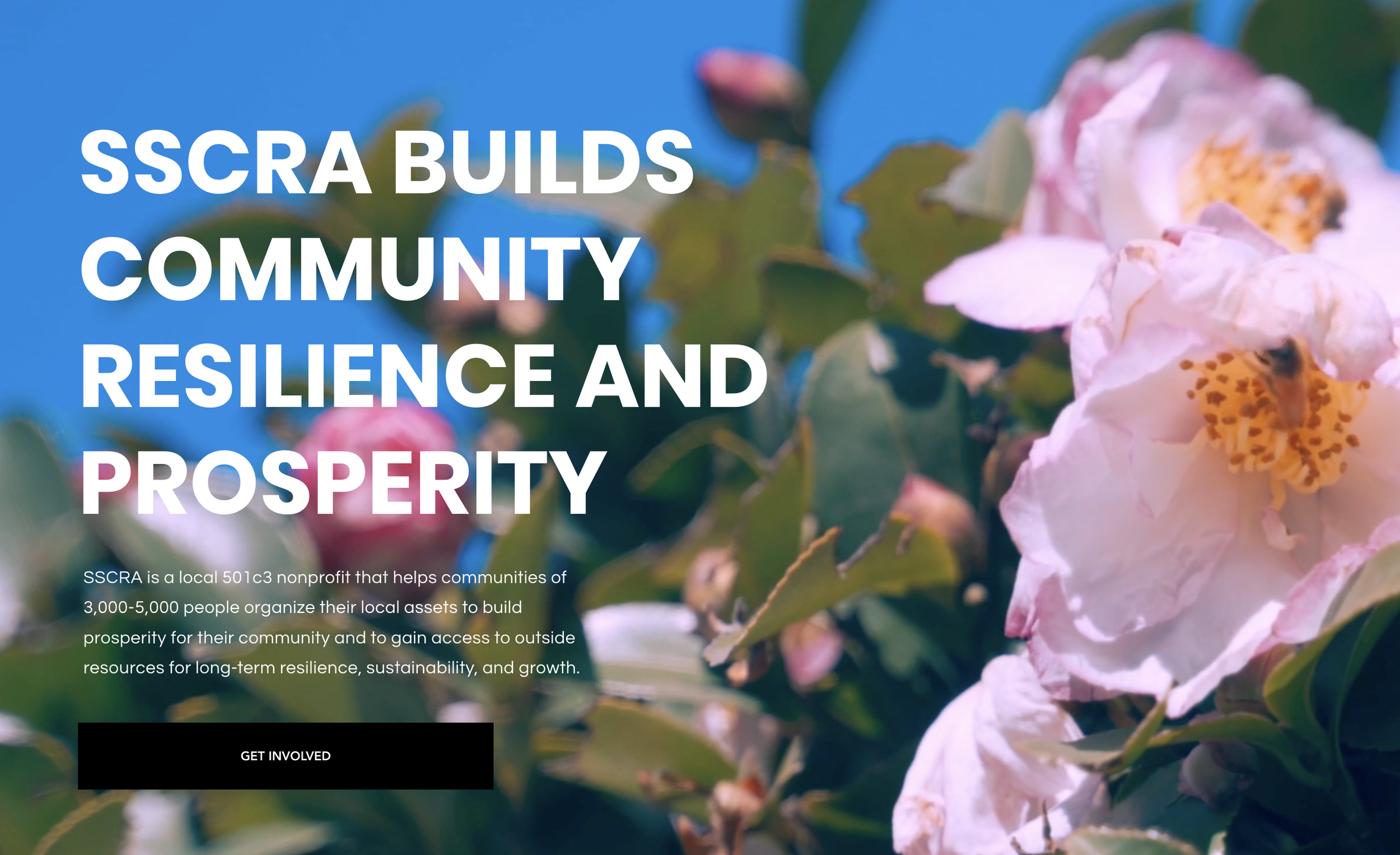
SSCRA (Seigler Springs Community Redevelopment Association) was founded in the aftermath of the 2015 Valley Fire in Lake County, Northern California — one of the most destructive wildfires in state history. Over a decade later, the organization had grown far beyond disaster relief into a full community development consultancy, but its digital presence hadn't kept pace. The website didn't reflect what SSCRA had become, and the community it served didn't fully understand the range of what it could offer.
Audience Research & Persona Development
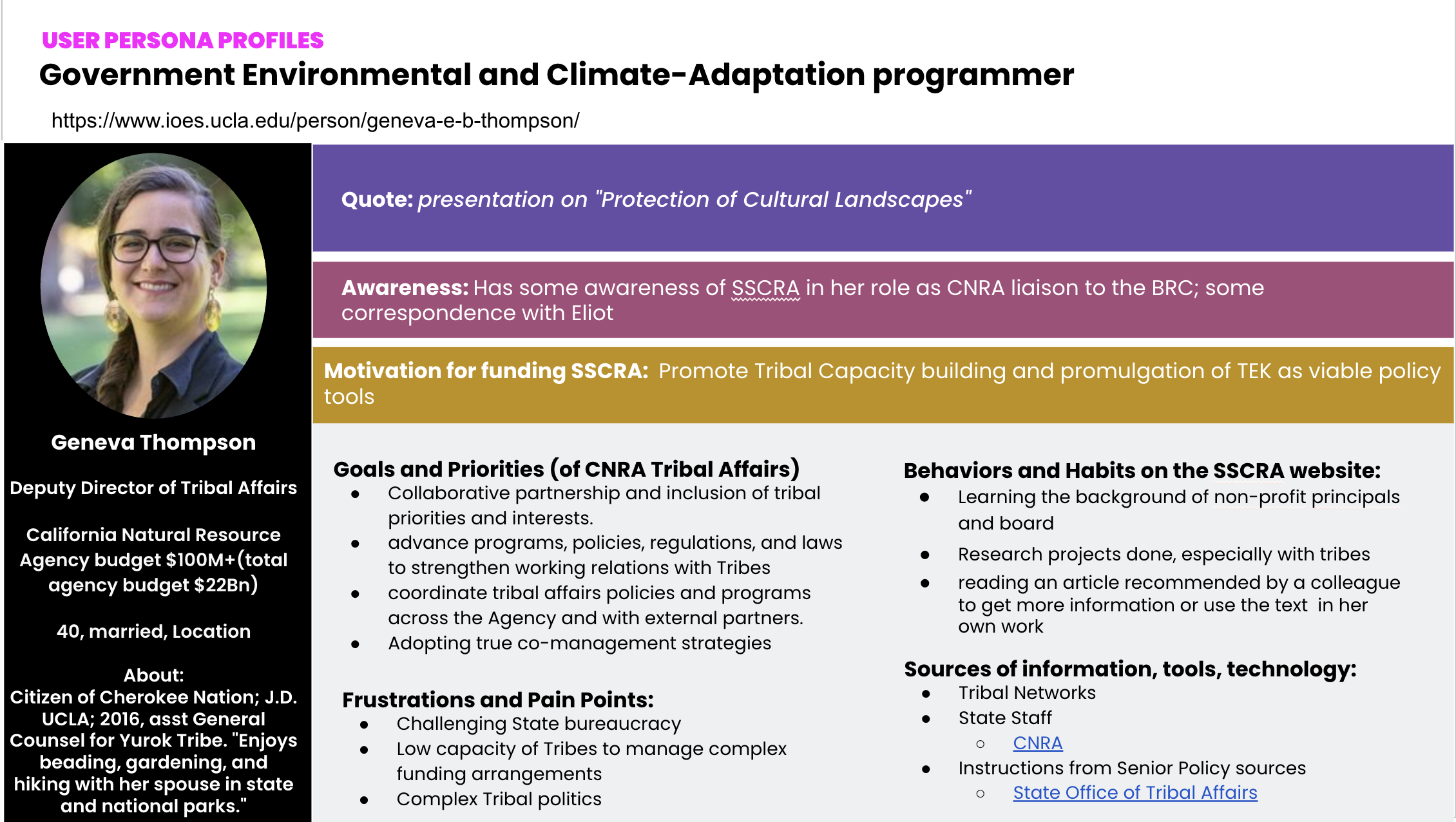
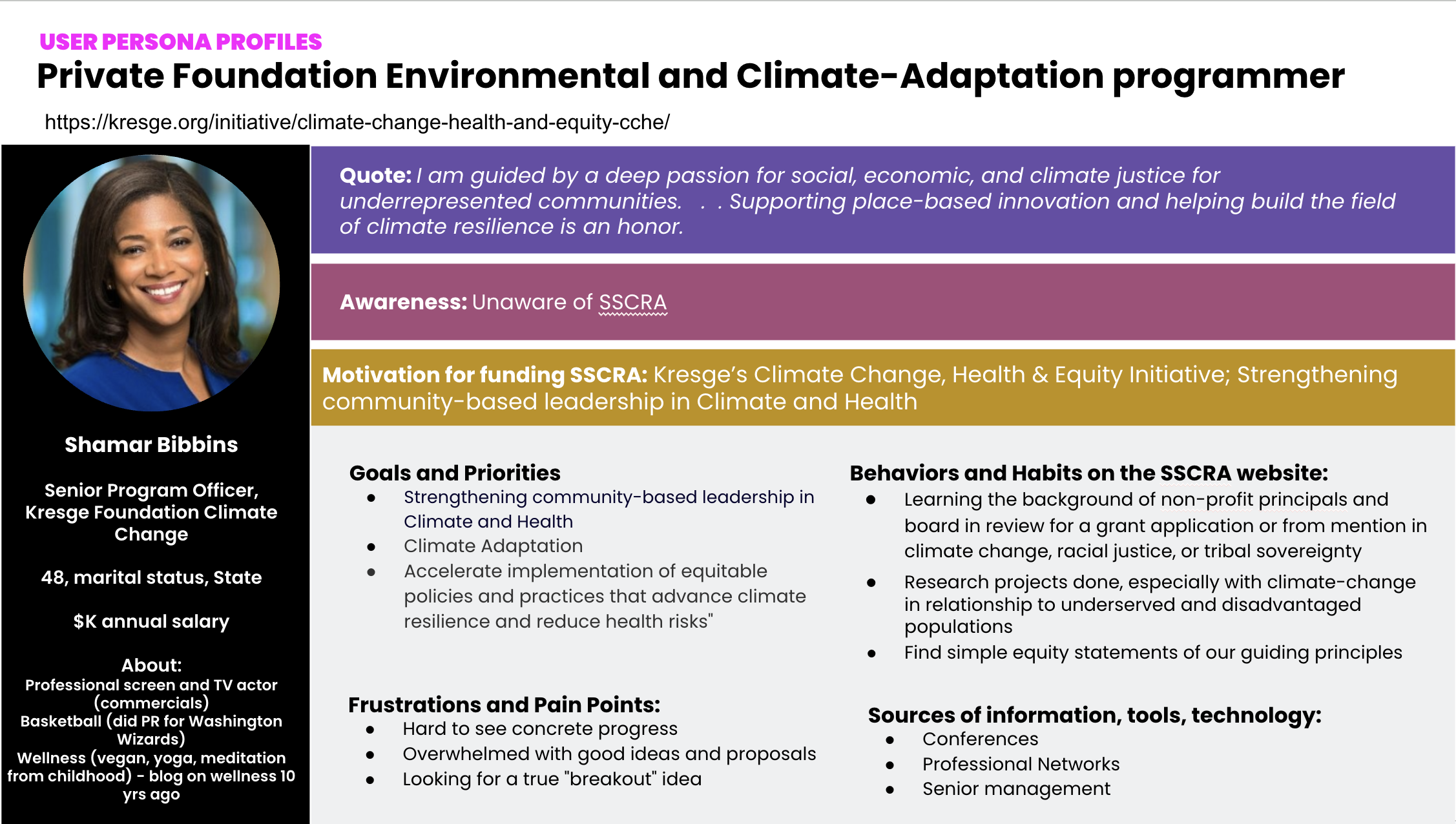
Before writing a single word of copy, I mapped SSCRA's key audiences — not as general archetypes, but as specific institutional actor types with real funding relationships, behavioral habits, and pain points on the site.
Key personas developed included government environmental and climate-adaptation program officers (such as California Natural Resources Agency liaisons managing tribal affairs and co-management policy), and private foundation climate program officers (such as Kresge Foundation senior staff focused on community-based climate and health equity). Each persona was mapped against their awareness of SSCRA, their motivation for engagement or funding, their goals and frustrations, and their specific behavioral patterns when visiting the site — what they look for, what they read, how they navigate.
This research directly shaped the site's content hierarchy, the language used in the mission and services sections, and the decision to surface SSCRA's equity statements, tribal partnership work, and project outcomes prominently — because those were the specific signals funders were looking for when evaluating credibility.
The Challenge
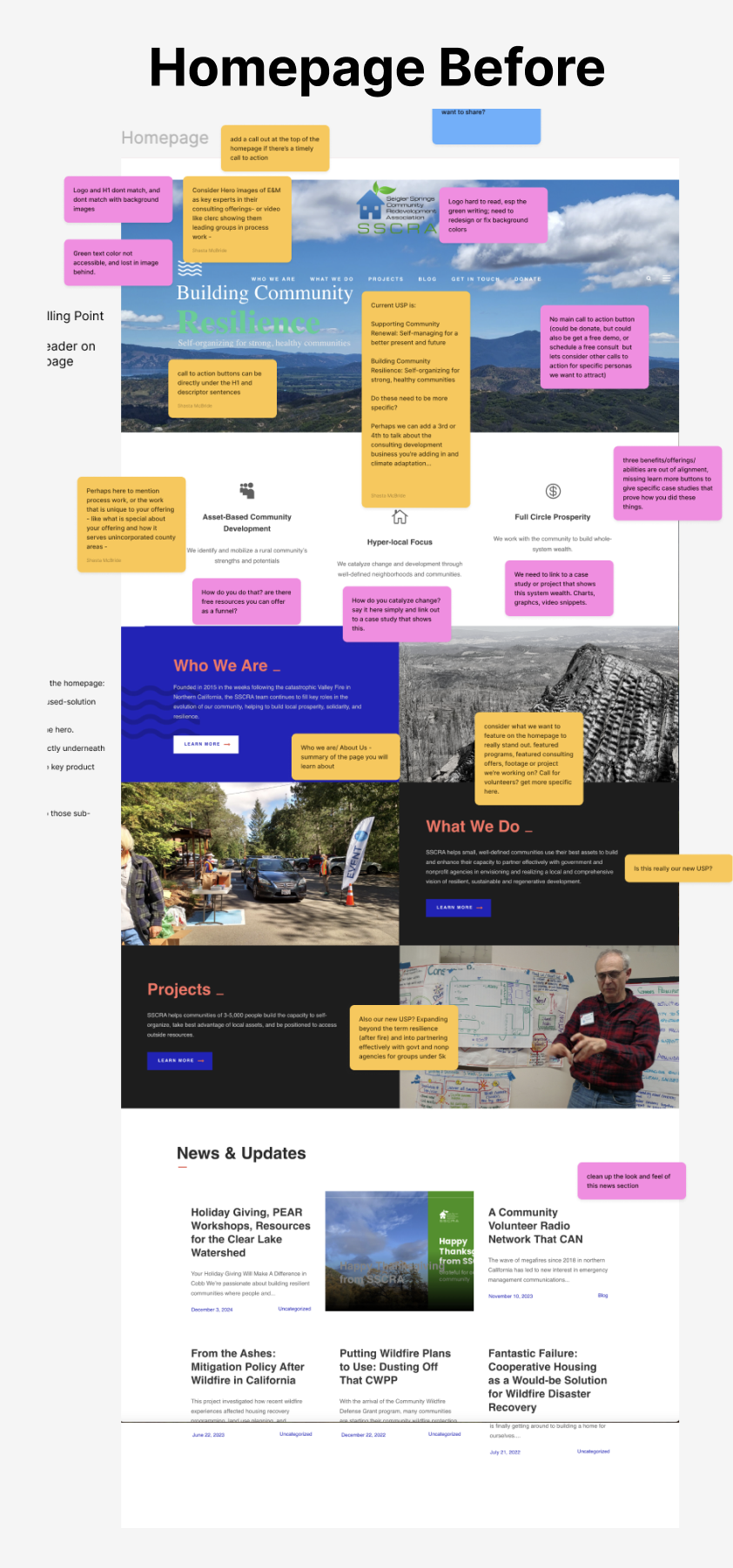
SSCRA's identity had evolved, but its story hadn't. The site led with fire resilience — which was historically accurate but strategically limiting. The real offering was broader: asset-based community development, fiscal sponsorship, climate adaptation consulting, and deep organizing work with rural communities that larger agencies can't reach.
The challenge was threefold: evolve the brand narrative without erasing the organization's origins, make the site maintainable by non-technical staff without ongoing developer support, and produce content clear enough to speak simultaneously to community members, volunteers, grant funders, and government partners — four very different audiences with very different needs.
What I Did:
Conducted stakeholder interviews and workshopping sessions with SSCRA leadership to surface the organization's evolved core offering and clarify the distinction between its wildfire relief legacy and its consulting present
Developed a full content strategy defining audience segments, key messages, and content hierarchy across the site
Chose Wix as the build platform specifically so SSCRA staff could maintain and update the site independently — a strategic decision that has proven out, as pages are regularly built, updated, and taken down for grant cycles without external support
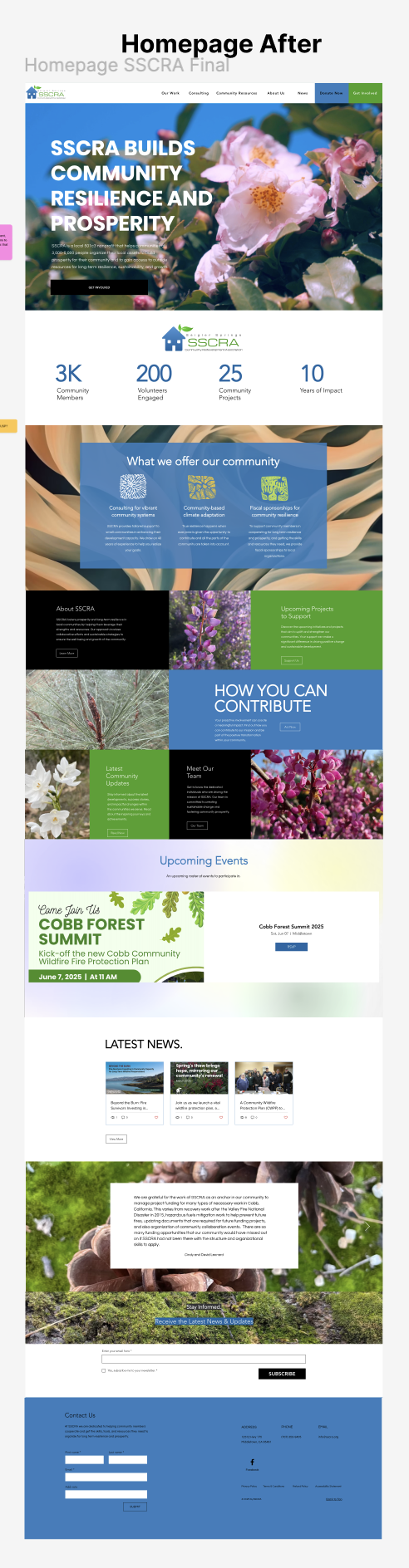
Wrote all website copy from scratch — homepage, service pages, about, projects, news, and community resources
Designed and built the site page by page, including navigation architecture, structured page templates, and a clear CTA hierarchy
Established and manage ongoing email marketing through Mailchimp, including campaign strategy, copywriting, and list growth
Before + After
Results
28.41% email open rate — above nonprofit industry average — up 9.21% year over year
11,279 emails sent over the past 12 months with a 98.16% delivery rate
Click rate up 16.02% year over year
Unsubscribe rate down 43.05% — meaning the audience is more engaged with the content over time, not less
878 active email subscribers with continued list growth
Site maintained independently by SSCRA staff across multiple active grant cycles with no developer dependency
What This Project Demonstrates
Content strategy isn't just about writing good copy — it's about understanding what an organization actually is, helping it say so clearly, and building systems that keep working after you've stepped back. This project required stakeholder alignment, audience analysis, platform strategy, ongoing content production, and the editorial judgment to hold a complex, multi-threaded mission together in language that different readers can each find themselves in.