From Fragmented Brand To Unified Content Architecture
Dennis And Ellen Relationship Coaching
My Role: Lead Content Strategist and UX Writer
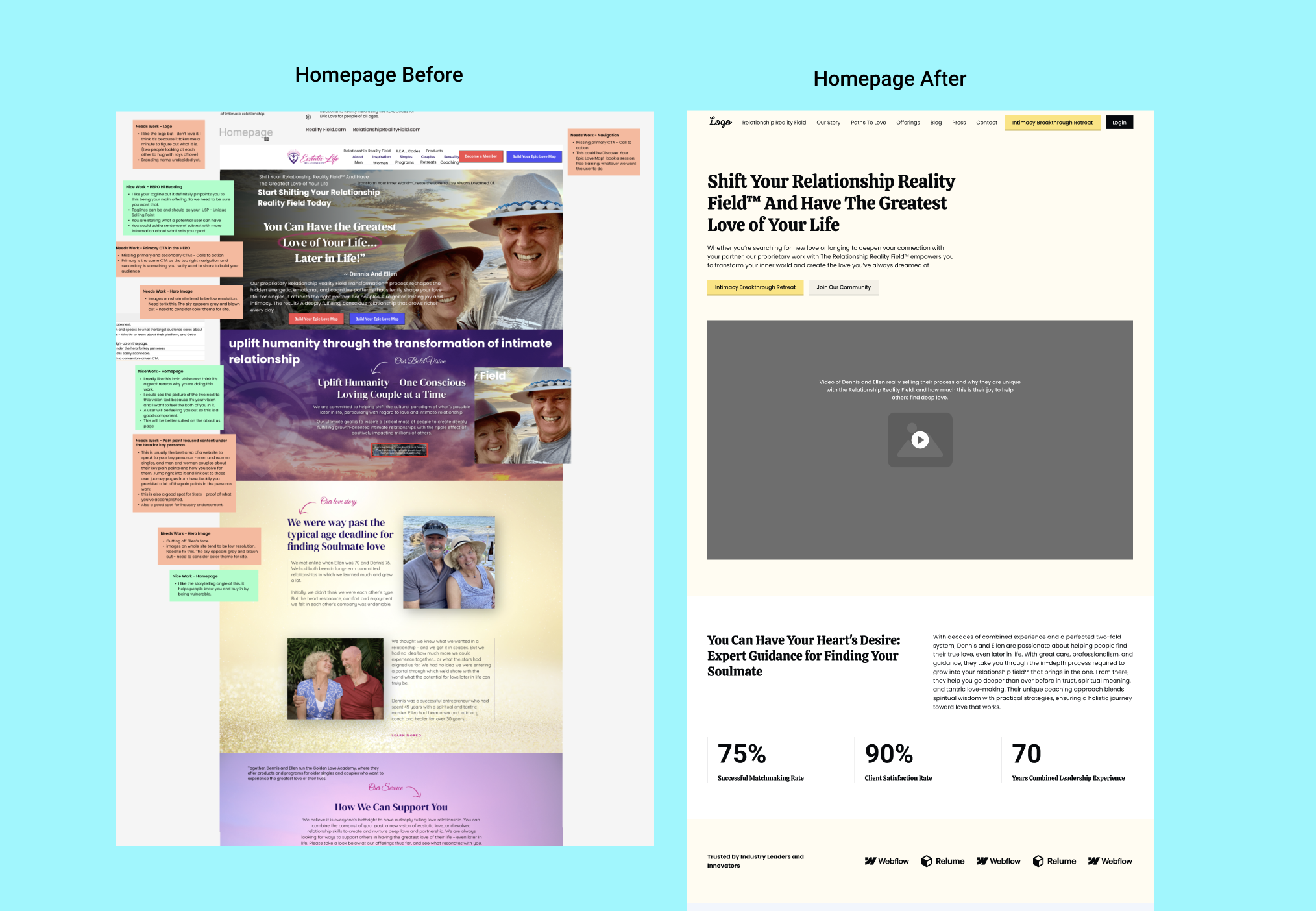
The Challenge
Three brands. No user pathways. A site that couldn't convert.
Dennis and Ellen are credentialed relationship coaches with 70+ combined years of experience — a proprietary transformation process, an active retreat program, a community platform, and a portfolio of digital products. What they lacked was a single content system that could hold all of it together and move the right person to the right offering.
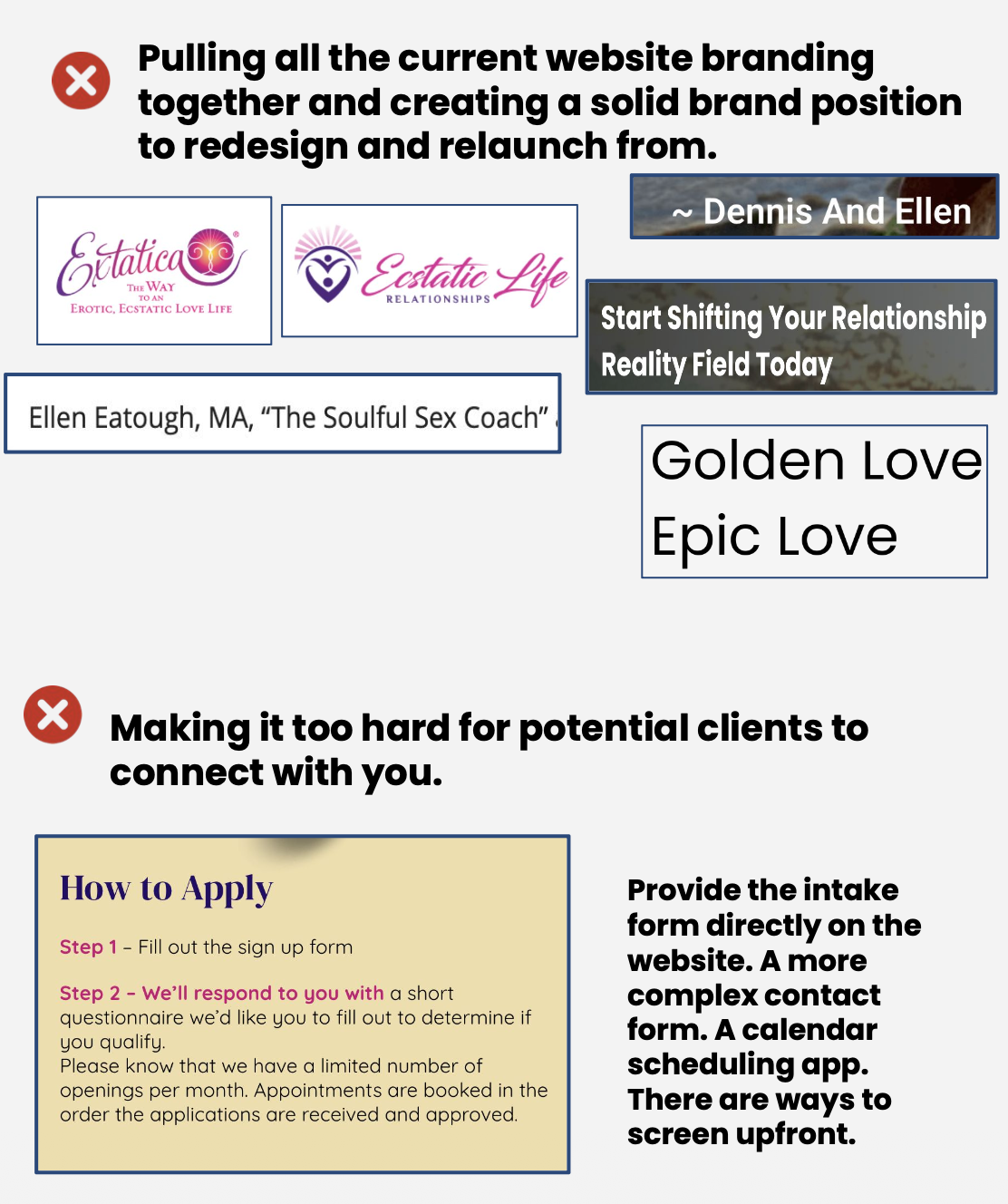
Their existing presence was split across three separate brand properties — DennisandEllen.com, Ecstatic Life Relationships, and Extatica — none of which talked to each other. The main site was a minimal shell with a buried two-step contact process, no calls to action, and gated content that kept prospective clients from discovering the depth of what was available.
I was brought in to lead the full strategy and redesign: conduct a UX and brand audit, define positioning and messaging, develop personas and user journeys, architect the site's information structure, map content across every page, and write the copy direction and UX copy for the new site.
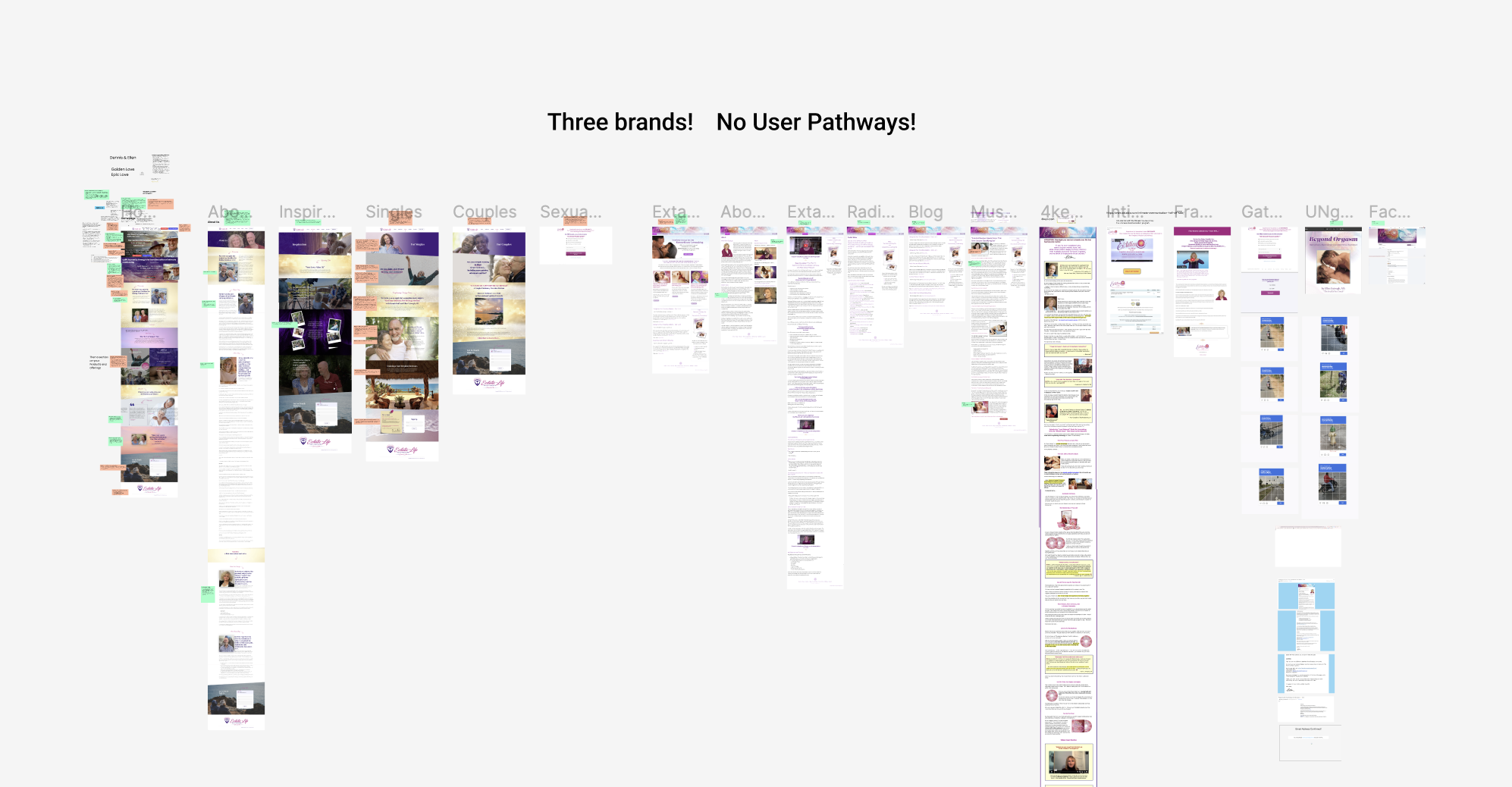
Before - Site state
✗ Three separate brand properties, no hierarchy
✗ Shell homepage with no CTAs or user pathways
✗ Two-step friction gate to contact the coaches
✗ No persona-specific pages or content pathways
✗ Gated content with no free-value lead magnets
✗ No statistics, testimonials, or social proof
✗ No defined brand voice or messaging framework
After - Redesign Direction
✓ Unified brand under one domain with clear hierarchy
✓ Conversion-focused homepage with dual CTA strategy
✓ Direct discovery call booking with inline intake form
✓ Four persona landing pages with tailored pathways
✓ Freebies page and lead magnets for email capture
✓ Stats row, testimonials, and trust-building integrated
✓ Defined voice: sophisticated, spiritual, transformative, warm
02 — Research & Discovery
A heuristic audit, three competitor teardowns, and four real user archetypes.
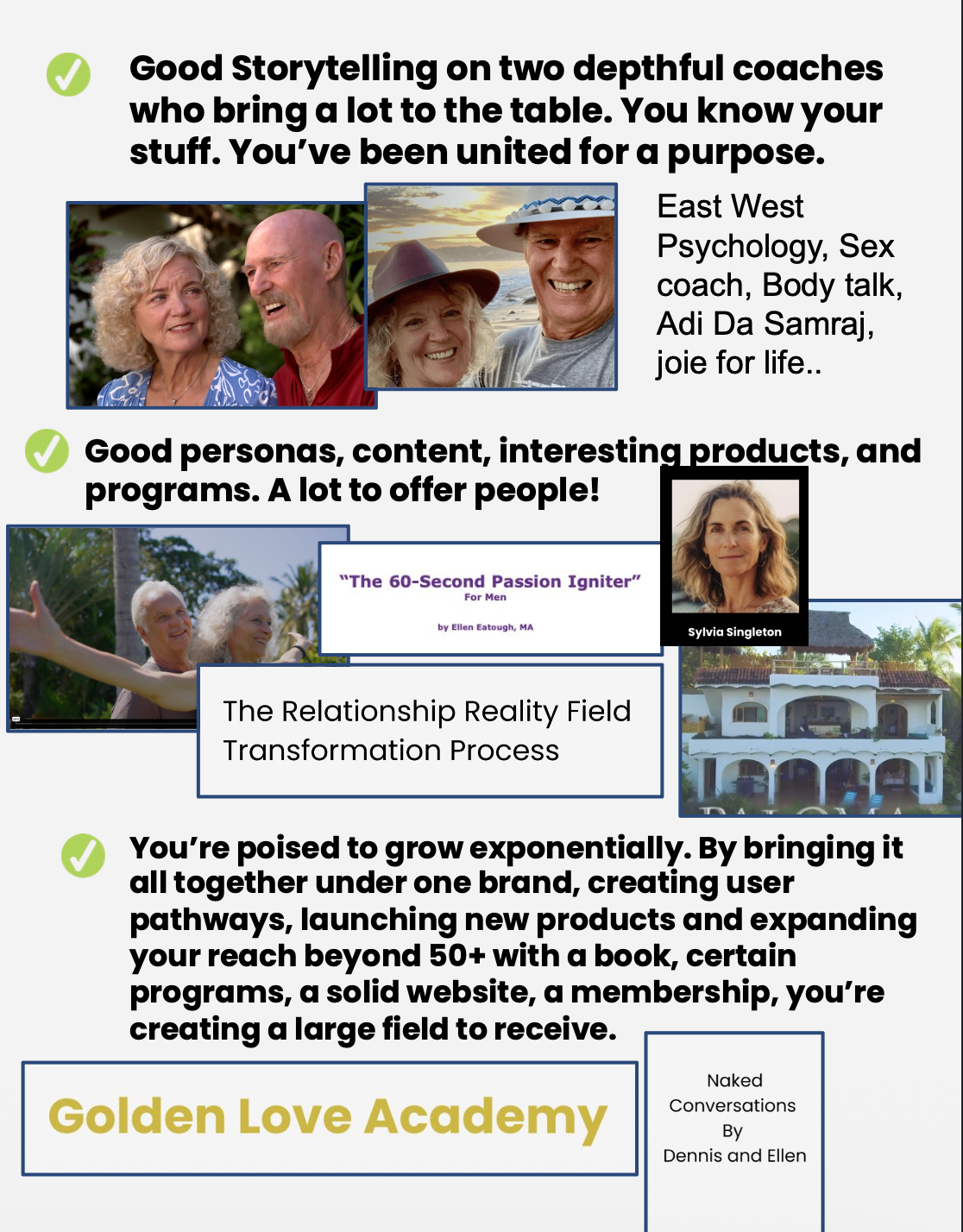
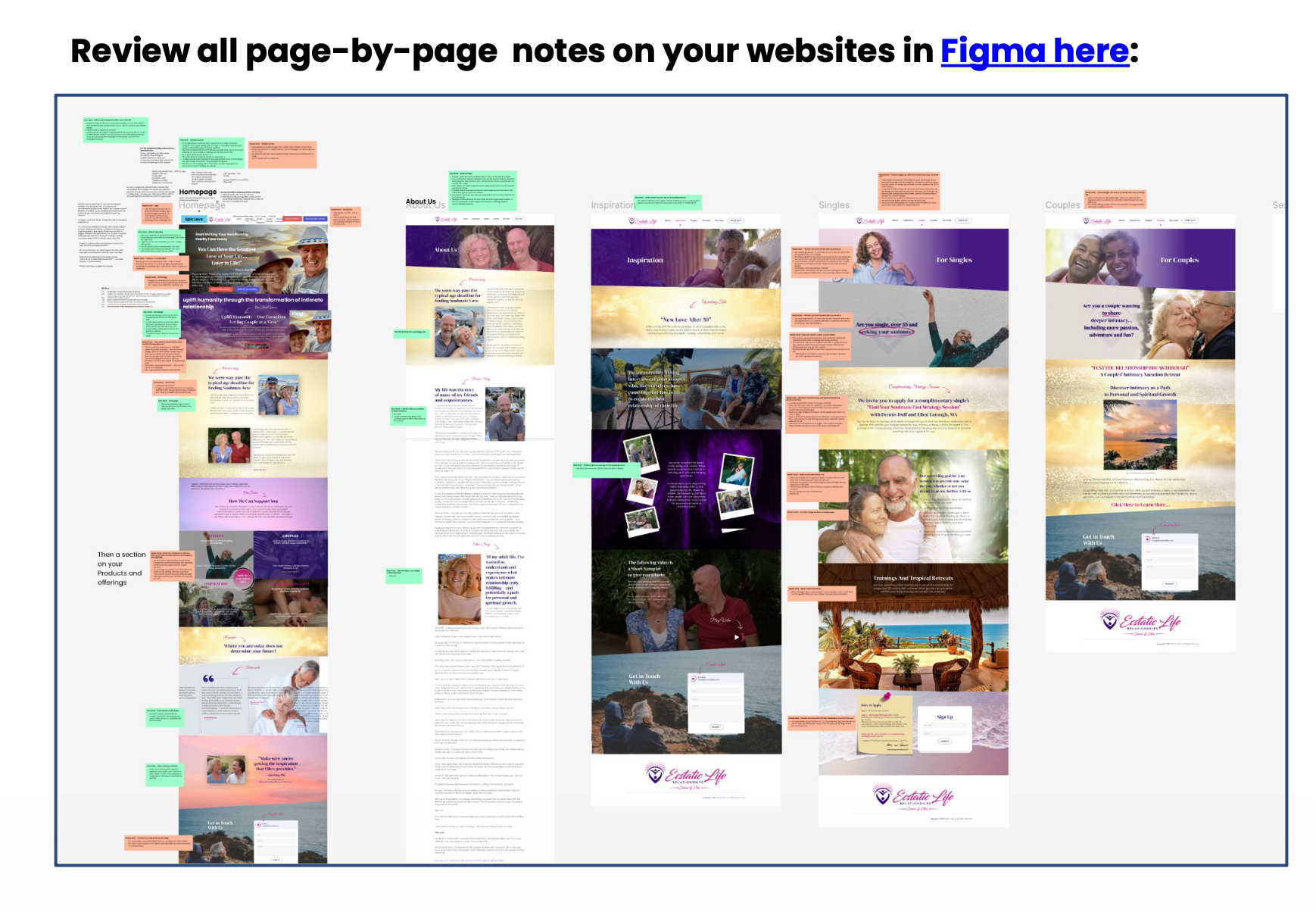
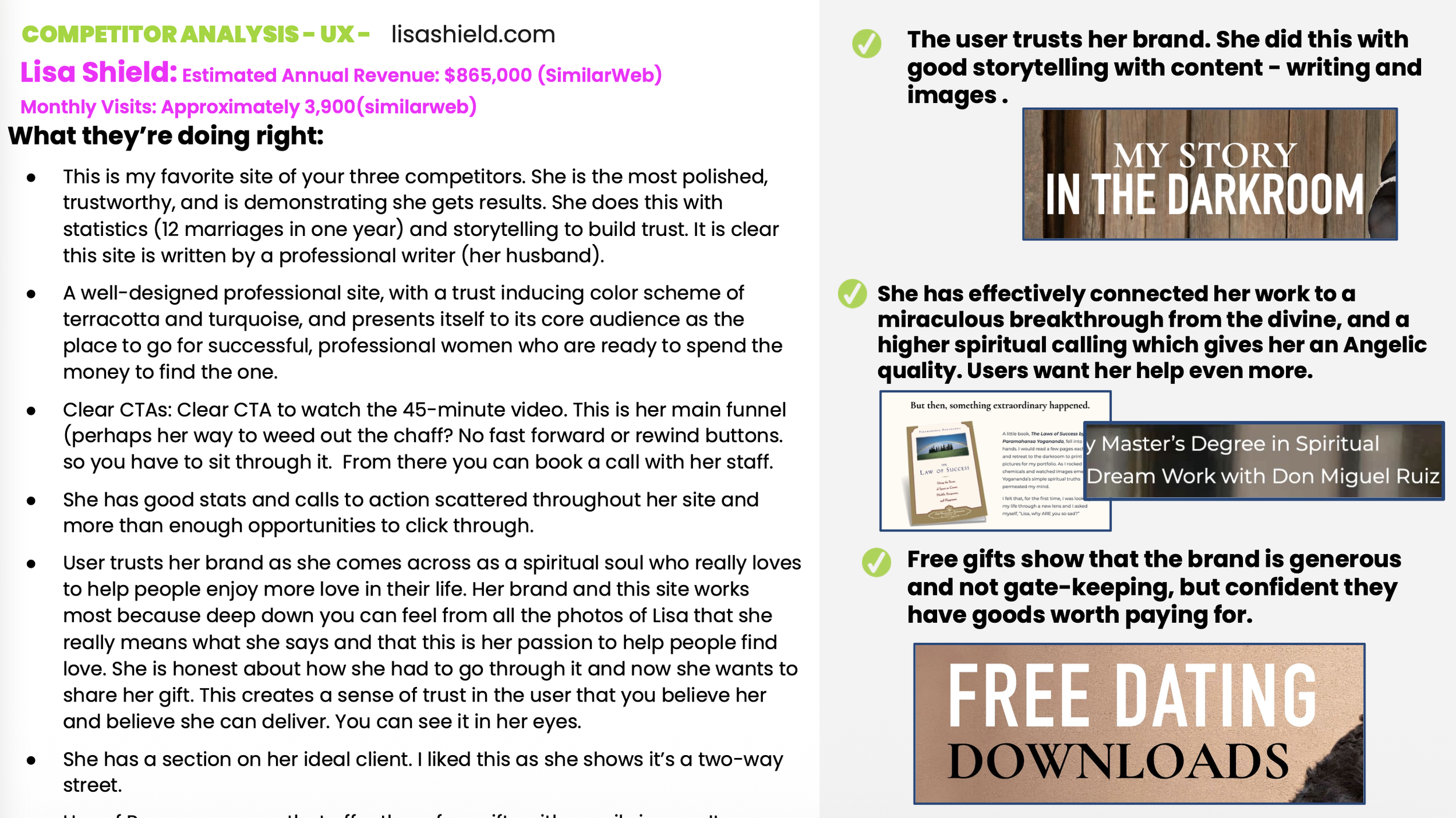
I structured discovery in three layers: a UX heuristic review of the existing Dennis & Ellen properties in Figma with page-by-page annotations, a competitive UX analysis of three direct competitors, and deep persona development from client interviews and demographic research.
The analysis surfaced a clear market gap: no competitor combined authentic spiritual authority with rigorous content architecture and persona-specific copy. That intersection was Dennis and Ellen's white space.
Key competitive findings:
→ Professional writing quality created invisible trust that drove conversions — a signal that every word on the new site needed to be intentional.
→ Persona-specific pages were the right idea, poorly executed across competitor sites — CTAs buried below the fold, jargon-heavy copy, no clear pathway between offerings.
→ Free lead magnets signaled generosity and confidence. Dennis and Ellen had the content — they just needed a system to surface it.
3 competitor sites analyzed in Figma · 4 primary personas fully developed · 18+ pages with full content mapping
03 — Content Strategy
Four personas. Five pathways. One unified message.
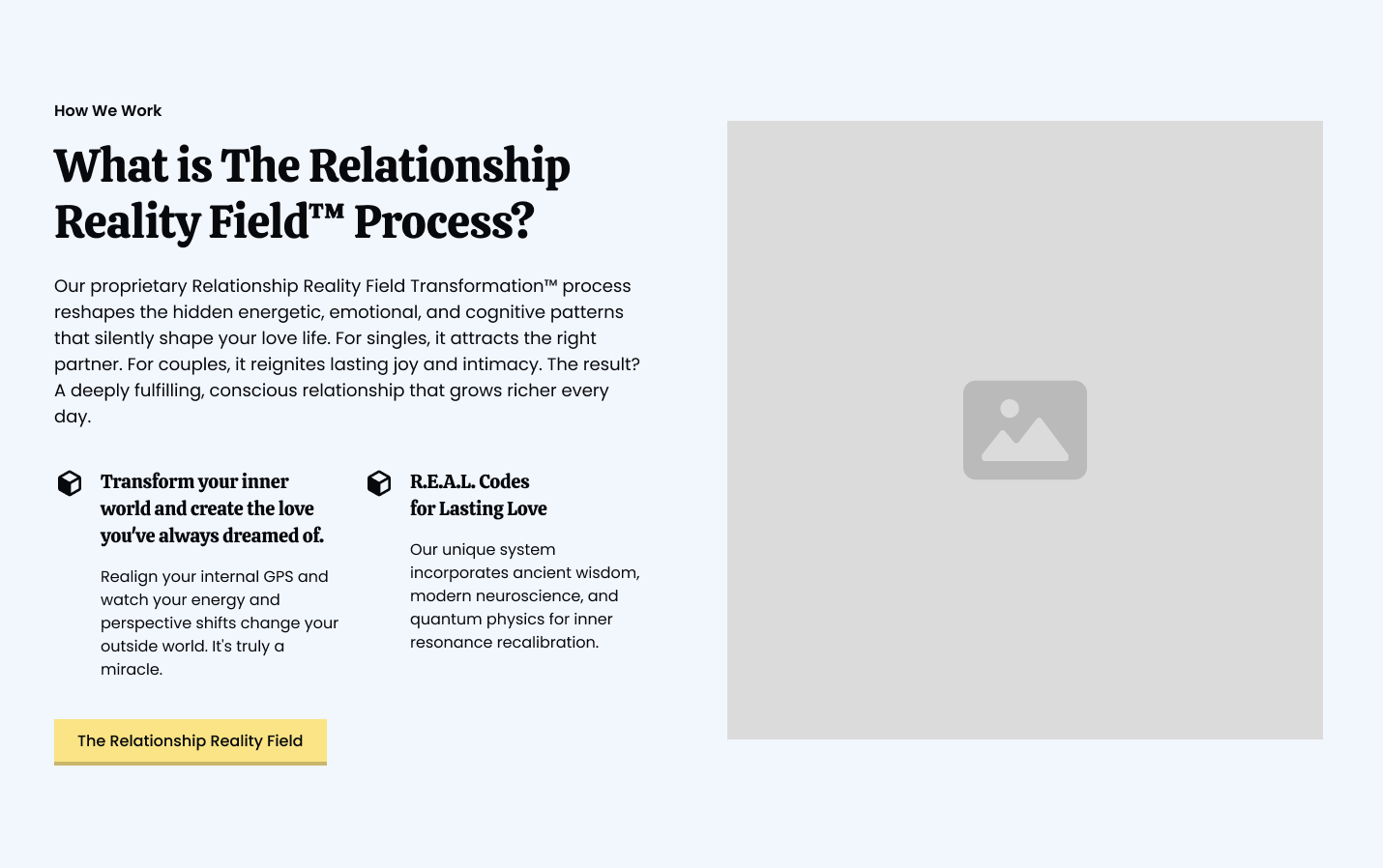
The strategic foundation rested on a single positioning decision: lead with the proprietary IP — the Relationship Reality Field Transformation™ Process — as the brand's core differentiator, then build distinct persona pathways that route users through it in ways that speak directly to their pain points and desires.
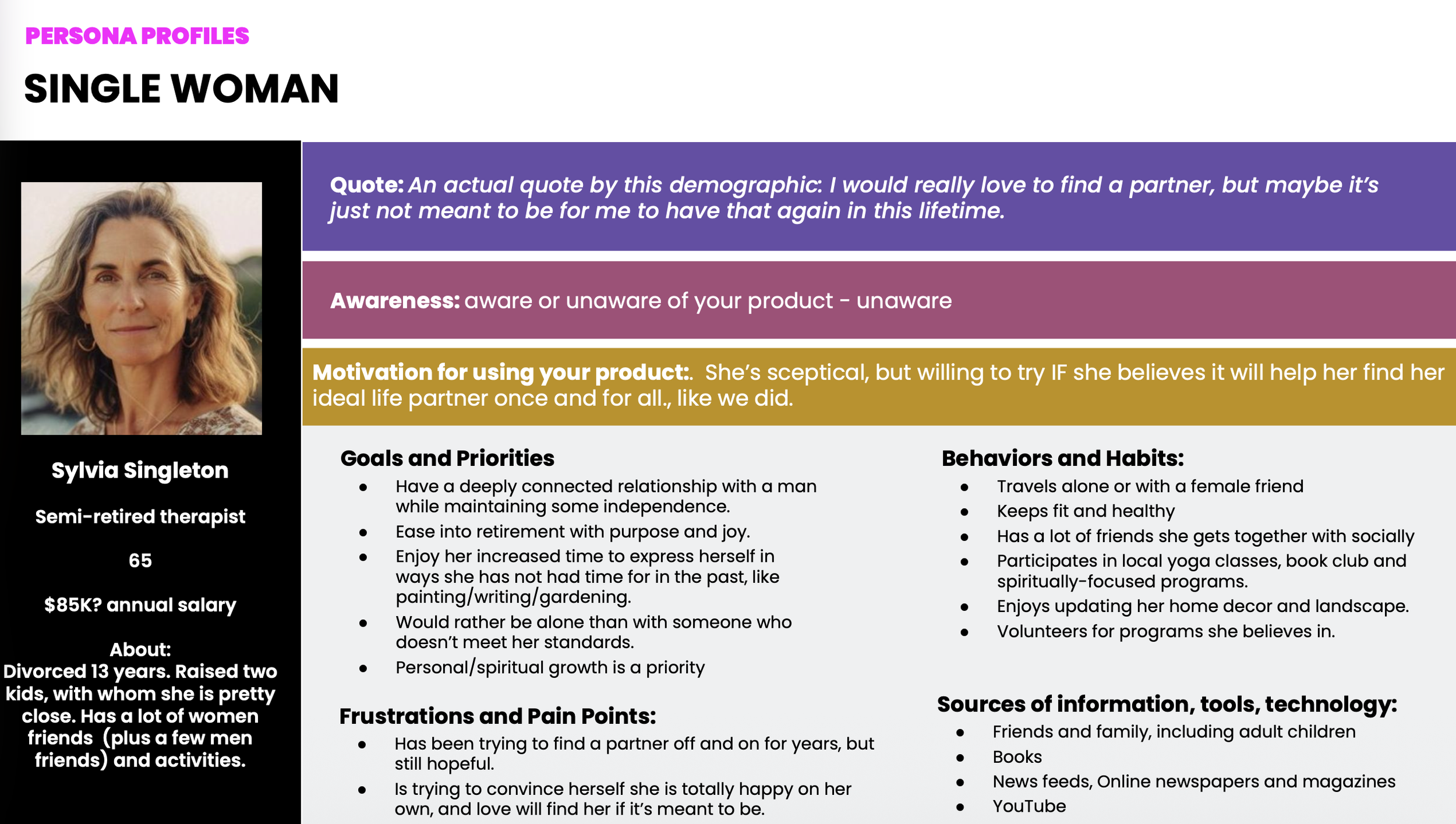
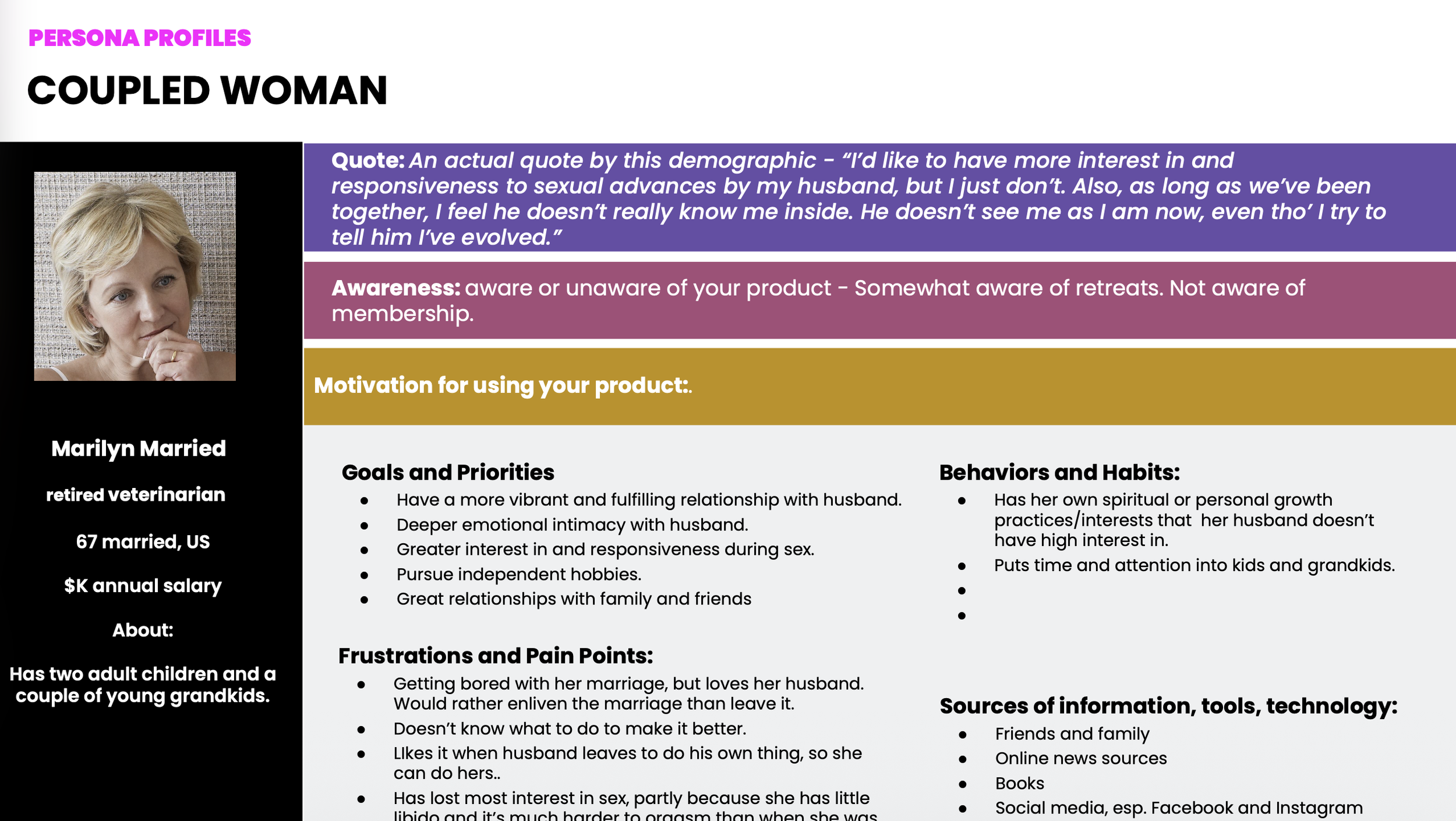
The four primary personas:
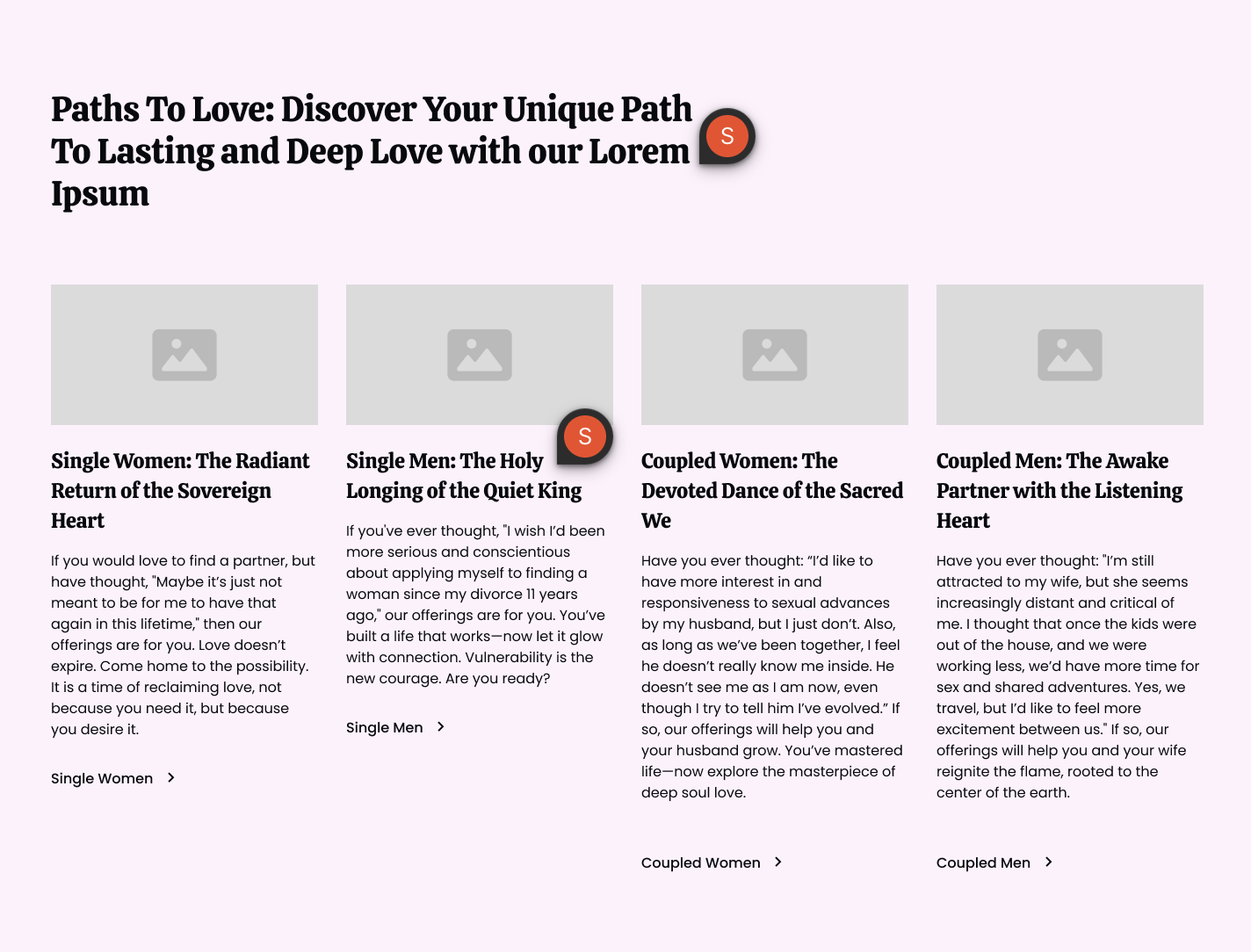
Sylvia — Single Woman, 65. Spiritually active, socially full, quietly longing. Skeptical of coaching but open if she believes it. Needs to feel seen, not sold to.
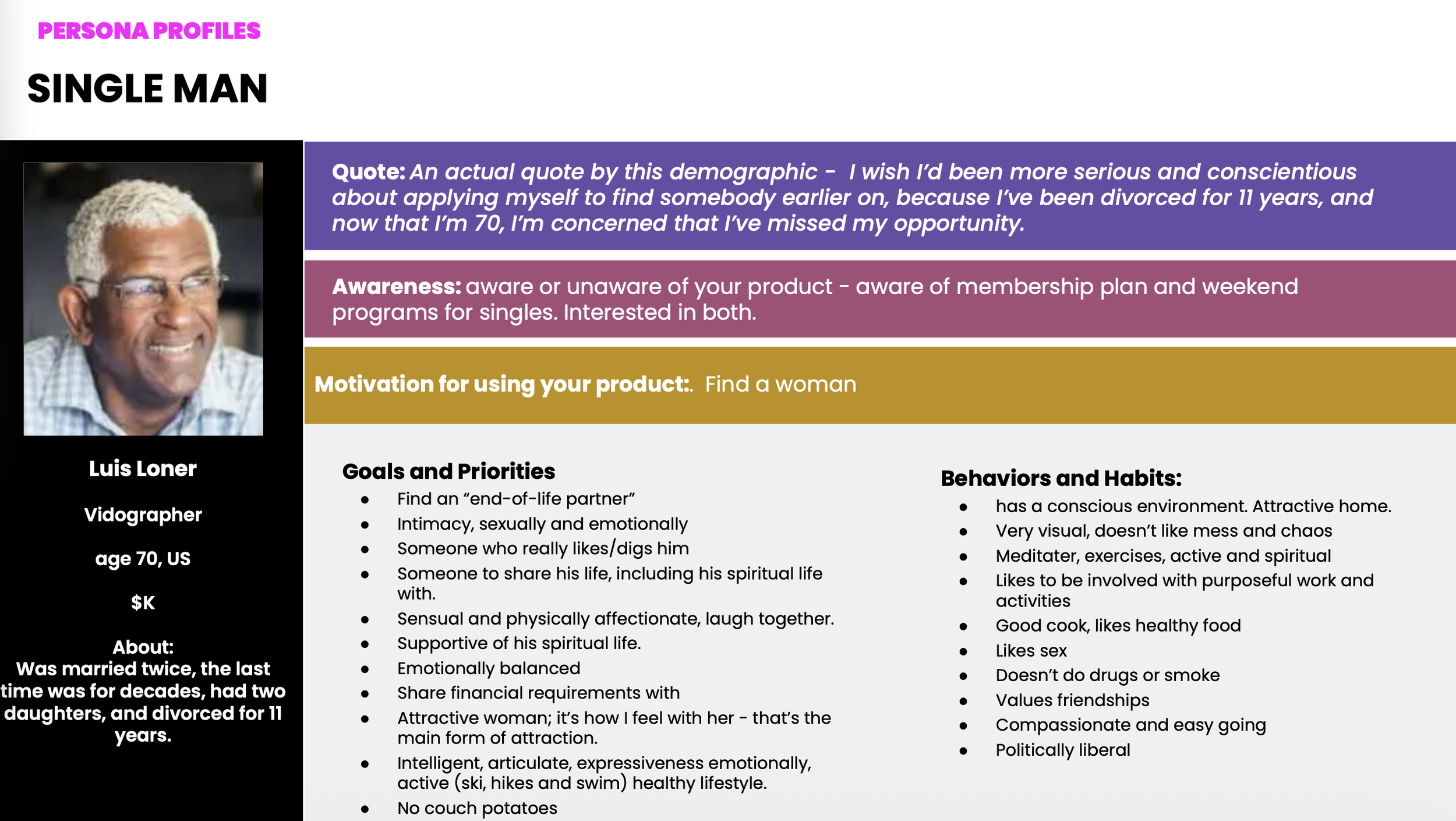
Luis — Single Man, 70. Meditator, active, self-aware. Fears he's left it too late. Needs urgent, specific hope — and permission to ask for help.
Marilyn — Coupled Woman, 67. Loves her husband; has grown past him. Low libido, invisible-feeling. Wants to reignite — but needs to feel the problem is solvable, not shameful.
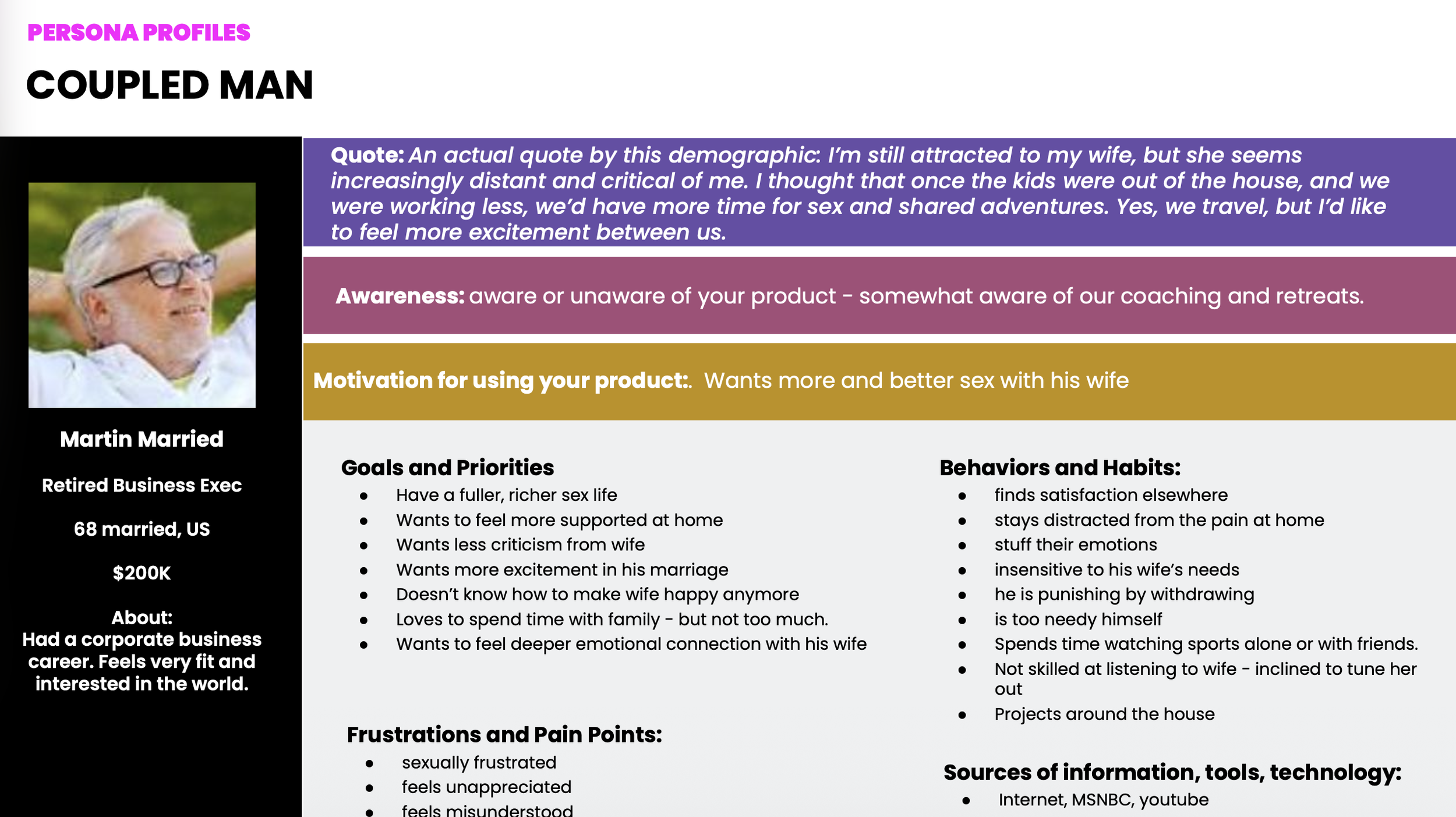
Martin — Coupled Man, 68. Sexually frustrated, emotionally avoidant. Doesn't know how to reach his wife. Needs practical entry points — and to feel like change is possible without blame.
Each persona received a dedicated landing page with tailored hero copy, pain-point framing, solution positioning, and direct links to the most relevant offerings.
Three strategic pillars shaped the entire content system:
Lead with the Why, Not the What. Every page opens with emotional truth — the user's longing, frustration, or desire — before introducing Dennis and Ellen's process. Benefits-first, not features-first.
Prove Authority Without Gatekeeping It. Surface stats prominently. Offer free lead magnets generously. Trust is built before a dollar is asked.
Clear Pathways for Every Persona. Every user should know within seconds: "This is for me." Persona-specific nav, landing pages, and CTAs replace the single generic user flow of the legacy site.
04 — Information Architecture & Content Mapping
A complete content system across 18+ pages — built from zero.
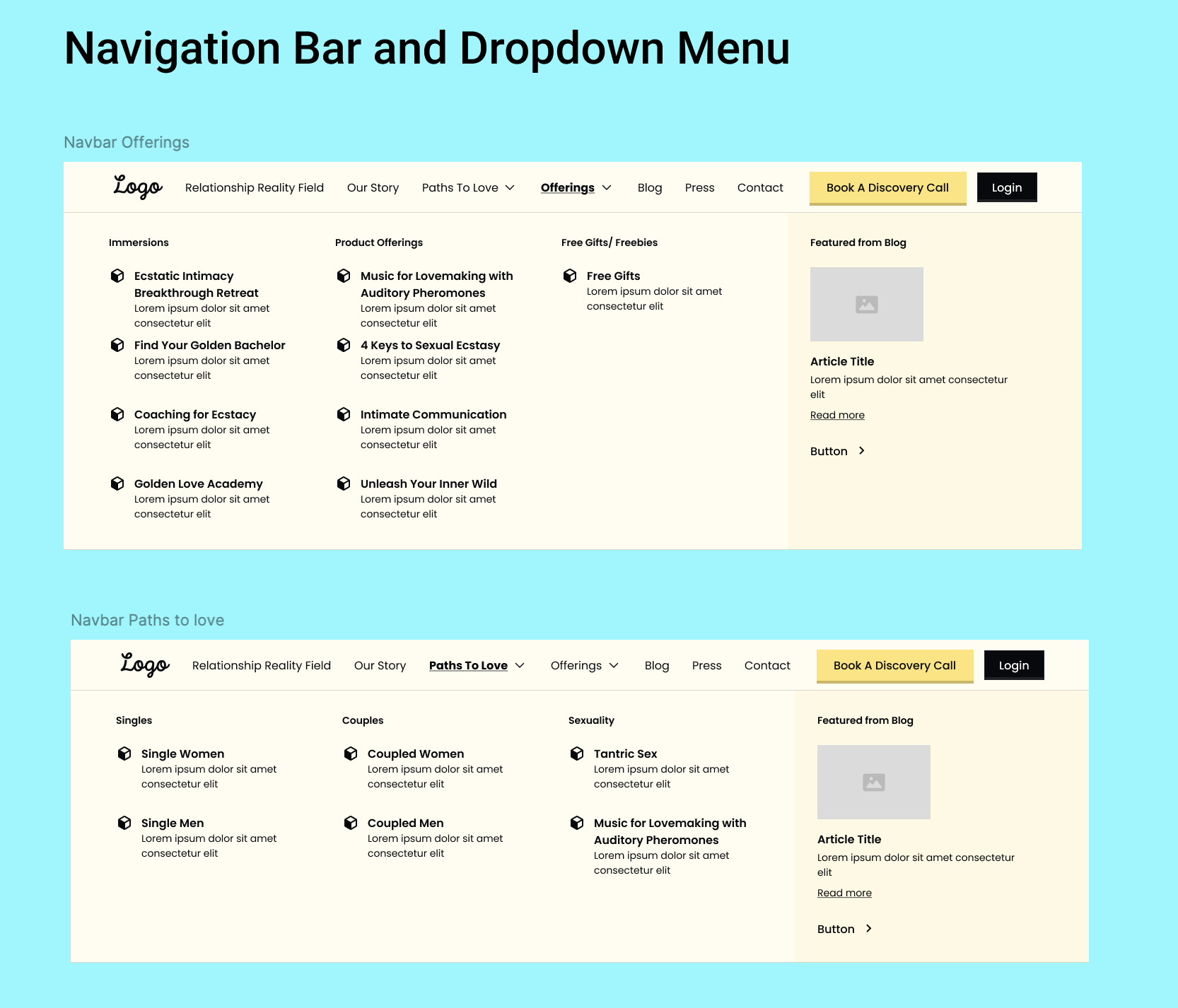
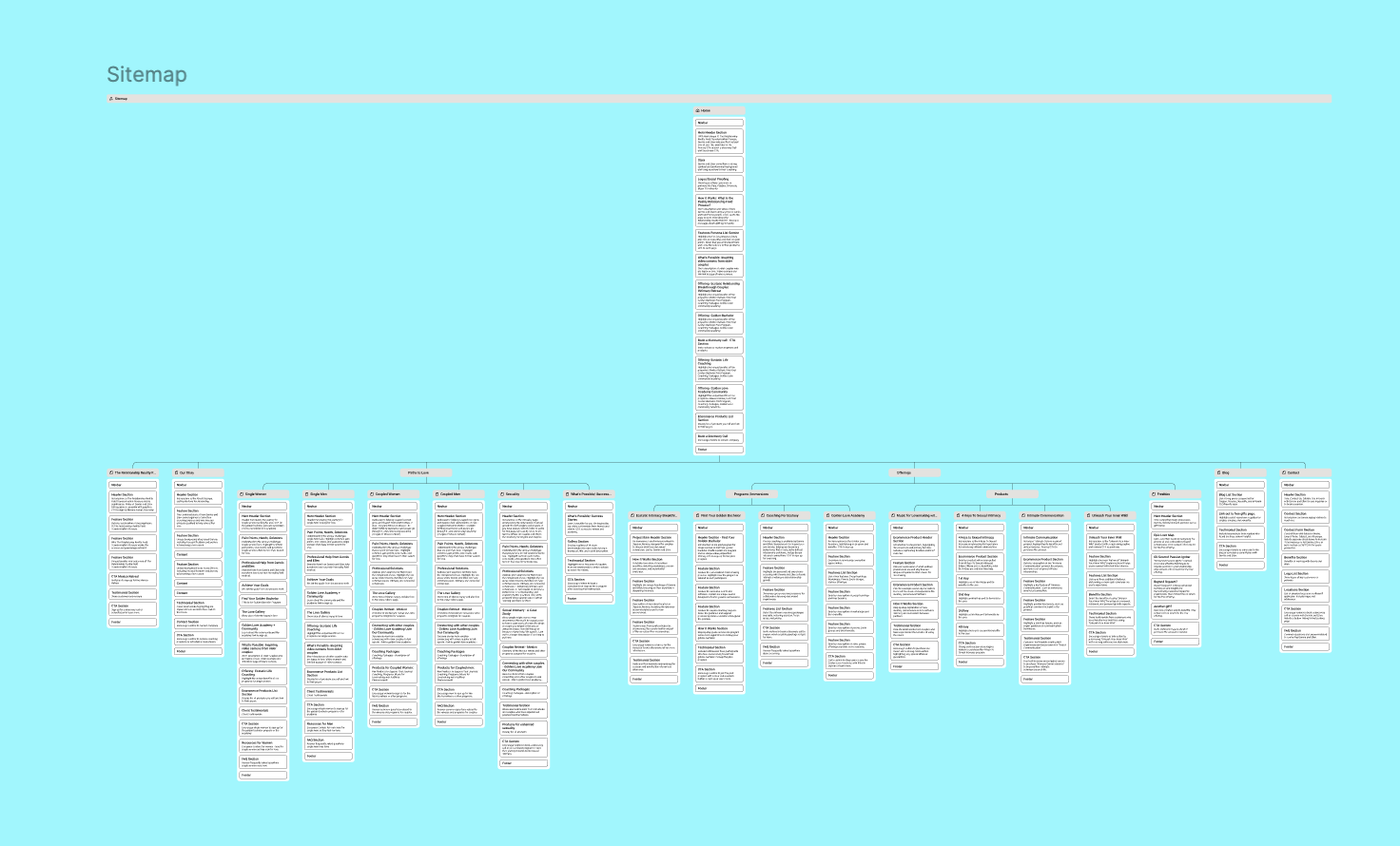
I designed the full site architecture and content map, moving from the flat four-page legacy structure to a multi-tier navigation system with dedicated pathways for each user segment. Every page was mapped to specific personas, offering types, and conversion goals before a single line of visual design was drawn.
Core / Global: Homepage · The Relationship Reality Field™ · Our Story · Blog · Press · Contact · Free Gifts
Paths to Love: Single Women · Single Men · Coupled Women · Coupled Men · Sexuality · What's Possible
Offerings / Programs: Ecstatic Intimacy Retreat · Find Your Golden Bachelor · Coaching for Ecstasy · Golden Love Academy
Products: Music for Lovemaking with Auditory Pheromones® · 4 Keys to Sexual Ecstasy · Intimate Communication · Unleash Your Inner Wild
Every page in the map included a section-by-section content outline: hero framing, pain-point articulation, solution positioning, social proof placement, CTA strategy, and FAQ treatment — with notes on which persona each section was optimized for and what conversion action it was driving toward.
05 — Voice, Tone & Copy Direction
Spiritual authority, rendered in plain English.
The brand voice I defined: sophisticated, transformative, vulnerable, warm, and precise. The competitive analysis showed that the fastest way to lose a spiritually curious 60-year-old is to lead with jargon. The goal was to translate Dennis and Ellen's genuine depth into copy that felt like it already knew the reader.
I wrote the homepage hero, four persona landing page headlines and intros, the "How We Work" section, and copy direction for every major section across the site — alongside strategic notes for the client and designer in Figma.
06 — Outcome
The strategy delivered a complete, stakeholder-approved foundation for the site rebuild: brand positioning, four developed user personas with full journey maps, a restructured IA covering 18+ pages, a section-level content map for every page, a defined voice and tone framework, UX copy and headlines across all key pages, Figma annotations throughout the audit, and a redesign-readiness checklist for the development handoff.
The site did not launch due to a family health emergency on the client side. All strategy and content deliverables were completed and handed off. The work stands as a full-system content strategy engagement — from discovery through production-ready copy — with no outstanding gaps in the strategic or content layers.
This was not a writing project. It was a systems project that required writing. Starting from a fragmented brand with no defined audience pathways, I built the entire content infrastructure: positioning, IA, persona-routed copy, conversion strategy, and page-level content mapping. Every recommendation was grounded in research, translated into plain stakeholder language, and executed in Figma-annotated deliverables the design team could act on directly.
Skills Demonstrated
Strategy & Architecture — Full-site information architecture · Content mapping at section level · Persona development & user journeys · Conversion strategy & CTA design · Competitive analysis & benchmarking
Writing & Voice — UX copy: heroes, CTAs, microcopy · Brand voice & tone definition · Persona-specific copy variation · Stakeholder-ready strategic narrative
Process & Collaboration — Figma for UX annotation & handoff · Cross-functional stakeholder management · UX heuristic review methodology · End-to-end project ownership